Top 9 Customer Journey Analytics Tools for B2B Firms

- Every B2B firm wants to know what clients think before they even say it, and that’s exactly what customer journey analytics tools make possible today.
- These tools turn data into insight, helping service firms fix weak points, personalize experiences, and build stronger loyalty over time.
- With the market expected to grow to $47.06 billion by 2032, firms using AI-driven analytics are already seeing better retention and higher satisfaction.
- Platforms like ClearlyRated are now redefining how service companies connect, listen, and act on every client moment to create experiences that actually matter.
Every firm dreams of knowing what its customers want before they even say a word. Sounds impossible, right?
But with today’s customer journey analytics tools, that dream is getting a lot closer to reality. These platforms help companies understand their customers’ actions, choices, and motivations so they can create experiences that truly connect. Think about it. When you know what drives a client’s decision, you can design smarter touchpoints, fix weak spots faster, and build stronger loyalty over time.
Recent research backs this up, too. For example:
- The global market for customer journey analytics is expected to grow from $17.91 billion in 2025 to $47.06 billion by 2032.
- B2B organizations that have already deployed AI-driven journey analytics expect to see positive outcomes. Interestingly, 35% of businesses expect to see results by increasing the number of interactions. In comparison, 53% believe that improving the quality of those interactions will deliver measurable impact within the next 12 to 24 months.
In this blog, we’ll explore what types of customer analytics solutions exist, how they benefit service firms, and what criteria you should use to pick the right ones. Let’s dive in.
Why Customer Journey Analytics Matters for B2B Service Firms
Every B2B firm wants to understand its clients and connect with them in a meaningful way. Customer journey analytics tools give you clarity into what your clients think, feel, and expect at every stage of their interaction with your brand.
Once you have that insight, you can shape experiences that make every touchpoint more relevant and memorable.
1. Deeper customer understanding
These tools help you uncover what clients really want, rather than guessing what might work. You can identify behaviors, preferences, and pain points with precision and use those findings to build detailed client personas.
A 2025 report shows how firms now analyze complete account journeys and group-buying patterns to track movement from first visit to final deal closure. This kind of insight lets your business shape interactions that actually resonate with clients.
2. Data-driven decision making
When your decisions are data-driven, they carry confidence. Client journey analytics turns numbers into clear actions that help your team decide what to fix, what to grow, and what to stop.
A recent study found that 61% of senior B2B leaders believe predictive insights will directly drive their company’s growth. That means analytics is becoming the backbone of smarter business choices.
3. Enhanced personalization
Every client appreciates it when you genuinely understand their needs. With analytics, you can create experiences tailored to individual preferences and anticipate future actions.
When clients feel seen and valued, satisfaction and loyalty naturally grow, giving your brand an edge that competitors can’t easily copy.
4. Increased retention and loyalty
Customer retention starts when you identify early signs that a client may be about to leave. These tools help you see those signals and act fast to win them back. For example, if a long-term client suddenly reduces their service usage or delays feedback on deliverables, the system can alert your team to check in, understand their concerns, and offer timely support.
In fact, research shows that firms that use focused journey analysis save 10-20% on costs and significantly improve customer retention rates. Even Gartner highlights, “Proactive engagement can prevent customer frustration and increase retention, especially in high-value B2B relationships.”
This shows that you can build loyalty through consistent attention, timely action, and a genuine understanding of client needs.
5. Optimized customer journeys
When you use B2B customer journey mapping, you can see the entire client experience from start to finish.
You’ll notice where clients get stuck or drop off and can adjust those moments into smoother, more satisfying experiences. That kind of attention transforms the journey into one that feels effortless and rewarding for your clients.
📌Interesting read: 10 Customer Retention Metrics & How to Measure Them
Essential Features for B2B Service Firm Journey Analytics
To make the most of the client journey analytics software, you need features that bring all your client data together and help you see the complete picture from every angle. Let’s look at the most critical features:
1. Multi-touchpoint data consolidation
Clients interact with your team through many channels, including:
- Website
- Calls
- Project interactions
Each touchpoint tells a different story. Bringing all that data together helps you understand how clients move between your website, emails, and project updates.
In fact, it is well established that firms that use integrated analytics gain deeper insights than those that track individual channels. When you see everything in one place, your decisions become far more accurate and impactful.
2. Long sales cycle and multi-year relationship tracking
B2B relationships rarely end after one deal. Clients often stay for years, and their needs shift with time. That’s why you need tools that let you monitor engagement through every stage of the partnership.
3. Account-level vs. individual-level analytics
B2B deals often involve multiple decision-makers, each with different motivations.
Hence, you need visibility into both account-level and individual-level data to understand how buying decisions unfold.
4. Integration with CRMs and project management systems (PMS)
Data means little if it sits in silos. The right client journey analytics software connects directly with your CRM and project tools so every conversation, update, and task feeds into a single view.
This integration provides teams with real-time visibility and helps them respond more quickly to client needs.
5. Sentiment analysis and satisfaction measurement at key milestones
Numbers tell part of the story, but emotions complete it. Tracking sentiment and customer satisfaction at major project milestones gives you early clues about client happiness. It helps you act before minor issues grow into bigger problems.
Combined with B2B customer journey mapping, this feature allows you to build stronger, more trusting relationships that last for years.
📌Suggested read: 8 Key Metrics for Measuring Customer Experience
Top General-Purpose Customer Journey Analytics Platforms
When companies want to better understand their customers, choosing the right customer journey analytics tools can make every interaction smarter and faster.
Here are some of the leading platforms you can explore:
1. Adobe Customer Journey Analytics: Enterprise-grade cross-channel insights
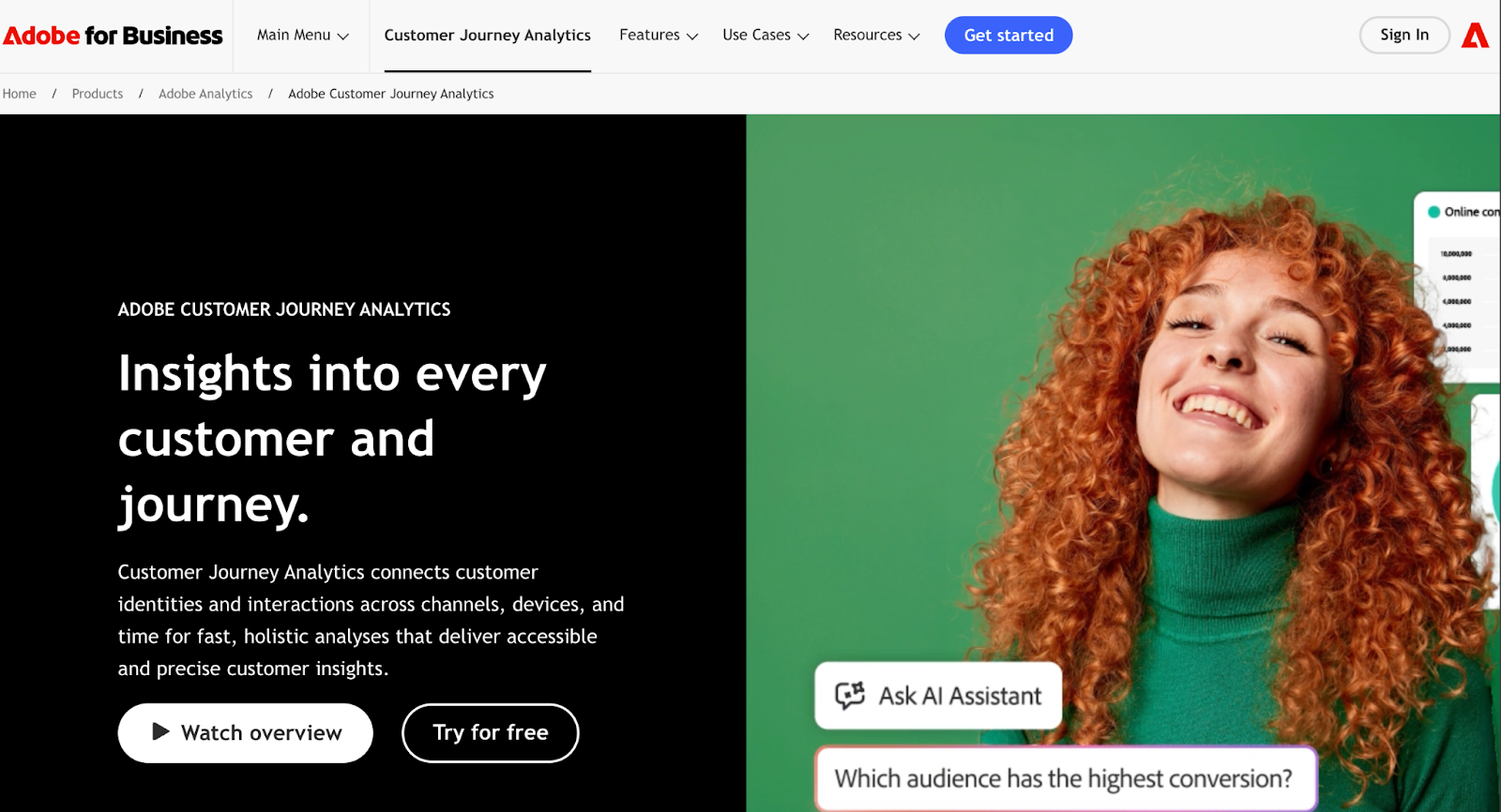
Adobe Customer Journey Analytics is built for modern first-party data strategies. It processes billions of data points in milliseconds, providing teams with client satisfaction analytics that help improve experiences at every step.
Here’s what makes Adobe stand out:
- Unify data from online and offline channels into a single customer profile
- Run detailed analyses with a modern framework that handles every type of customer data
- Connect campaigns to results by linking engagement across marketing channels, content, and customer touchpoints
Adobe also offers a B2B edition, giving marketing and sales teams actionable insights across accounts, buying groups, and opportunities.
2. Salesforce Marketing Cloud: CRM-integrated journey orchestration
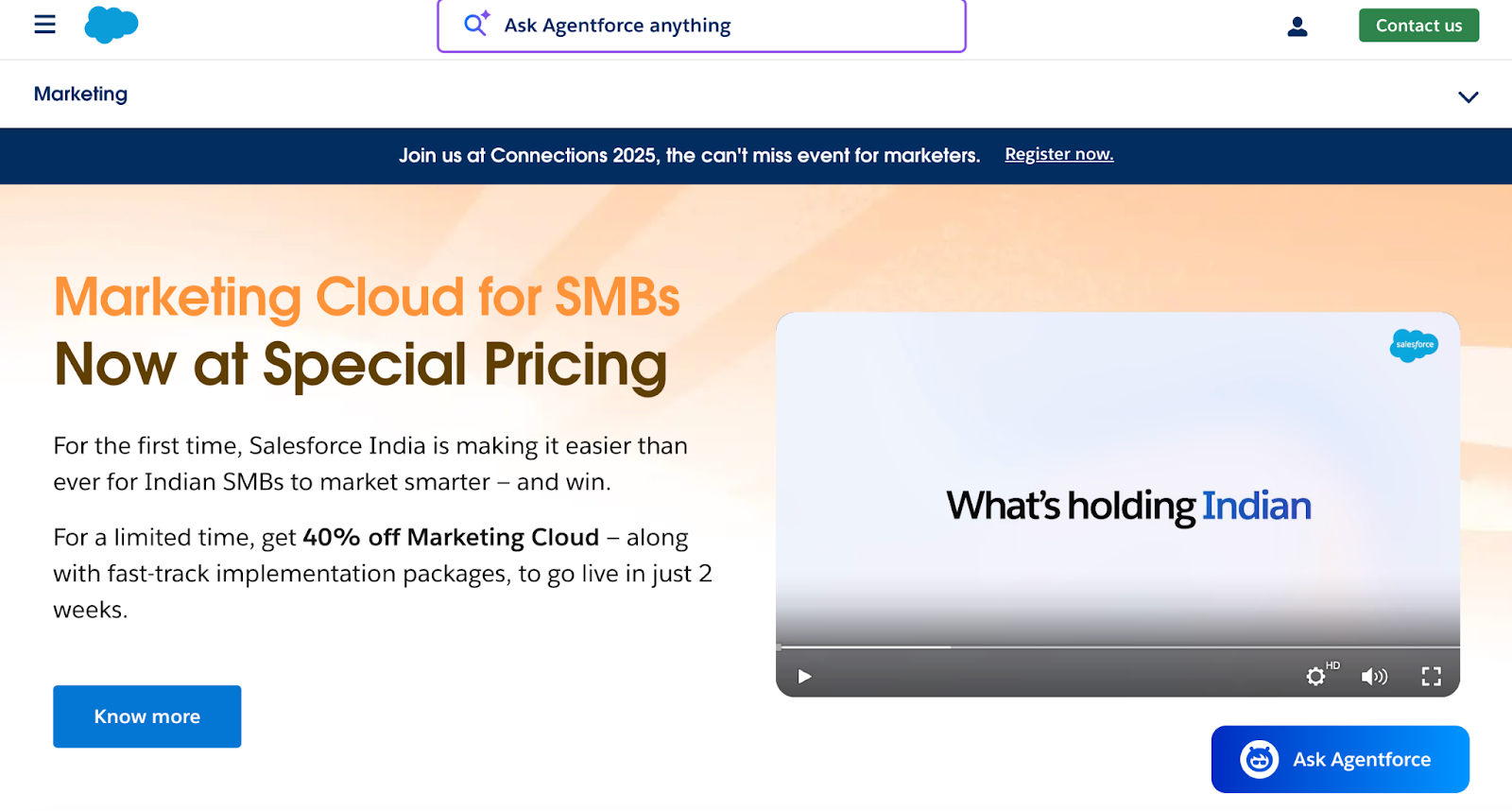
Salesforce Marketing Cloud helps teams personalize every customer interaction at every stage of the lifecycle using actionable data. It connects departments to work together efficiently and delivers insights through AI-powered tools like Agentforce.
Here is what Marketing Cloud can do:
- Unlock trapped data to deliver real-time personalization based on customer behavior
- Save time with AI by generating insights, content, and strategies faster than manual processes
- Activate campaigns anywhere to create consistent, cross-channel engagement that drives growth and loyalty
As a result, teams can achieve a 32% increase in overall marketing ROI, a 34% increase in customer lifetime value (CLV), and 32% and 27% increases in customer engagement and acquisition costs, respectively.
3. Google Analytics 360: Web-focused journey tracking
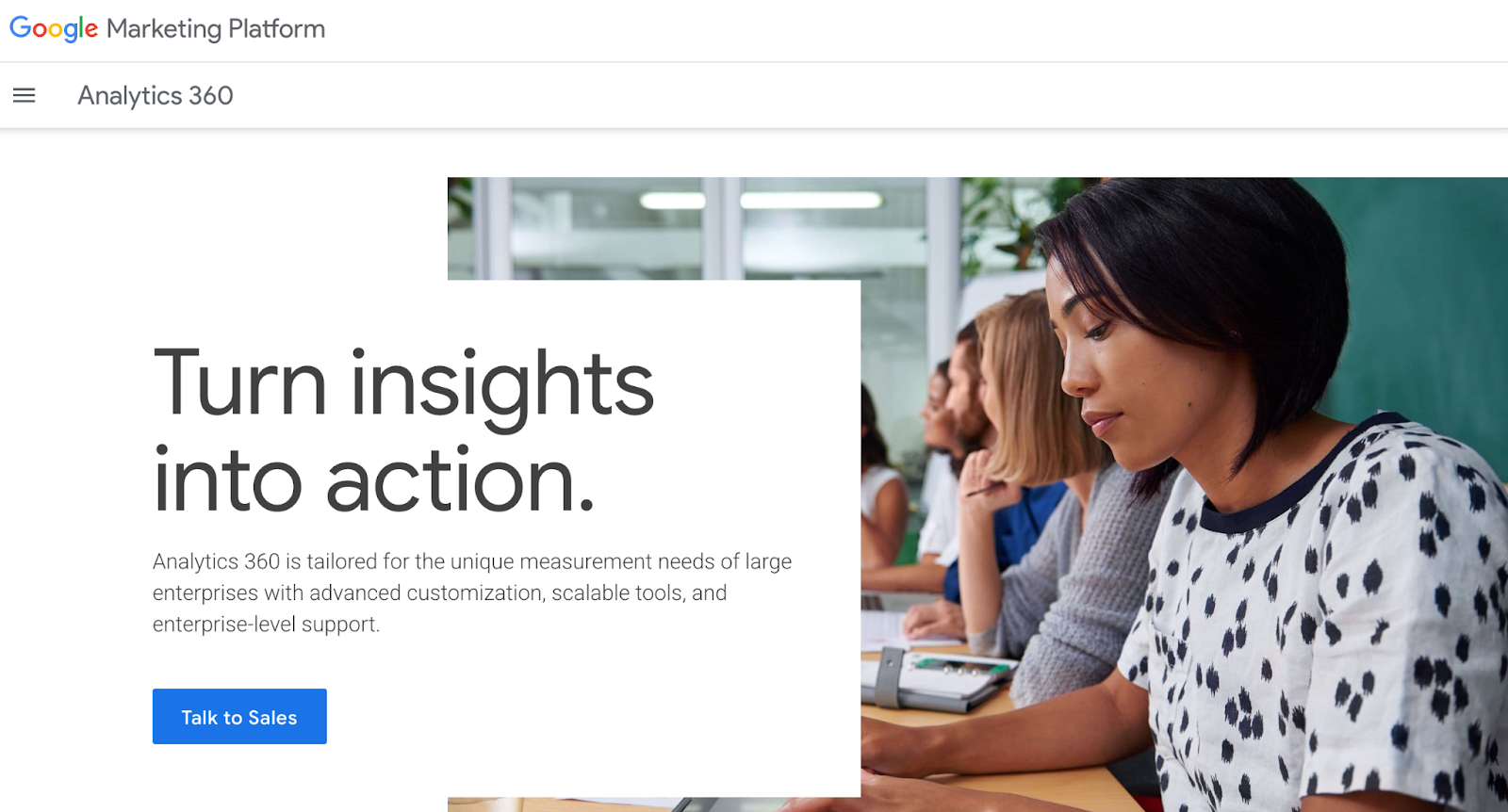
Google Analytics 360 provides complete, unsampled data reporting, ensuring precise insights that help improve website and app performance. Companies can export data to BigQuery for powerful storage, management, and analysis, transforming their reporting capabilities.
GA360 enables customer journey analytics tools to:
- Generate unsampled reports for an accurate understanding of visitor behavior
- Export large datasets to BigQuery for fast, reliable analysis
- Apply data-driven attribution models to understand which marketing channels drive conversions
4. Mixpanel: Event-based product analytics
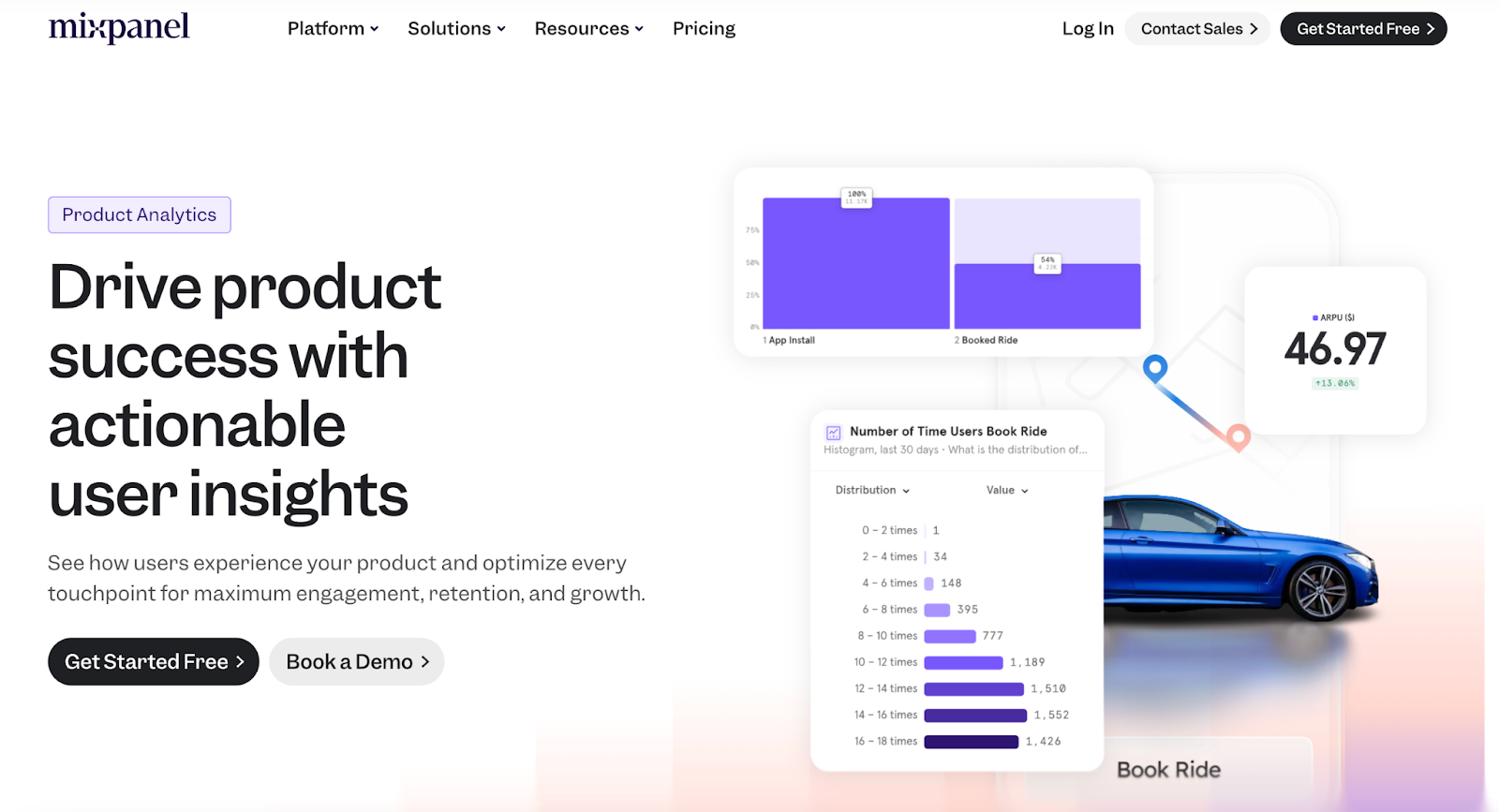
Mixpanel helps teams track user actions and optimize product experiences in real time. It provides actionable insights into user behavior to improve engagement, retention, and growth.
Here’s what Mixpanel offers:
- Real-time insights for all teams to analyze user trends and adjust strategies
- Funnel analysis to identify drop-offs and optimize user journeys
- Cohort segmentation to target groups with personalized customer experiences
Teams across product, data, marketing, and engineering can work together on one platform, using heatmaps, dashboards, and charts to guide improvements and boost long-term loyalty.
5. Amplitude: Behavioral insights and predictive analytics
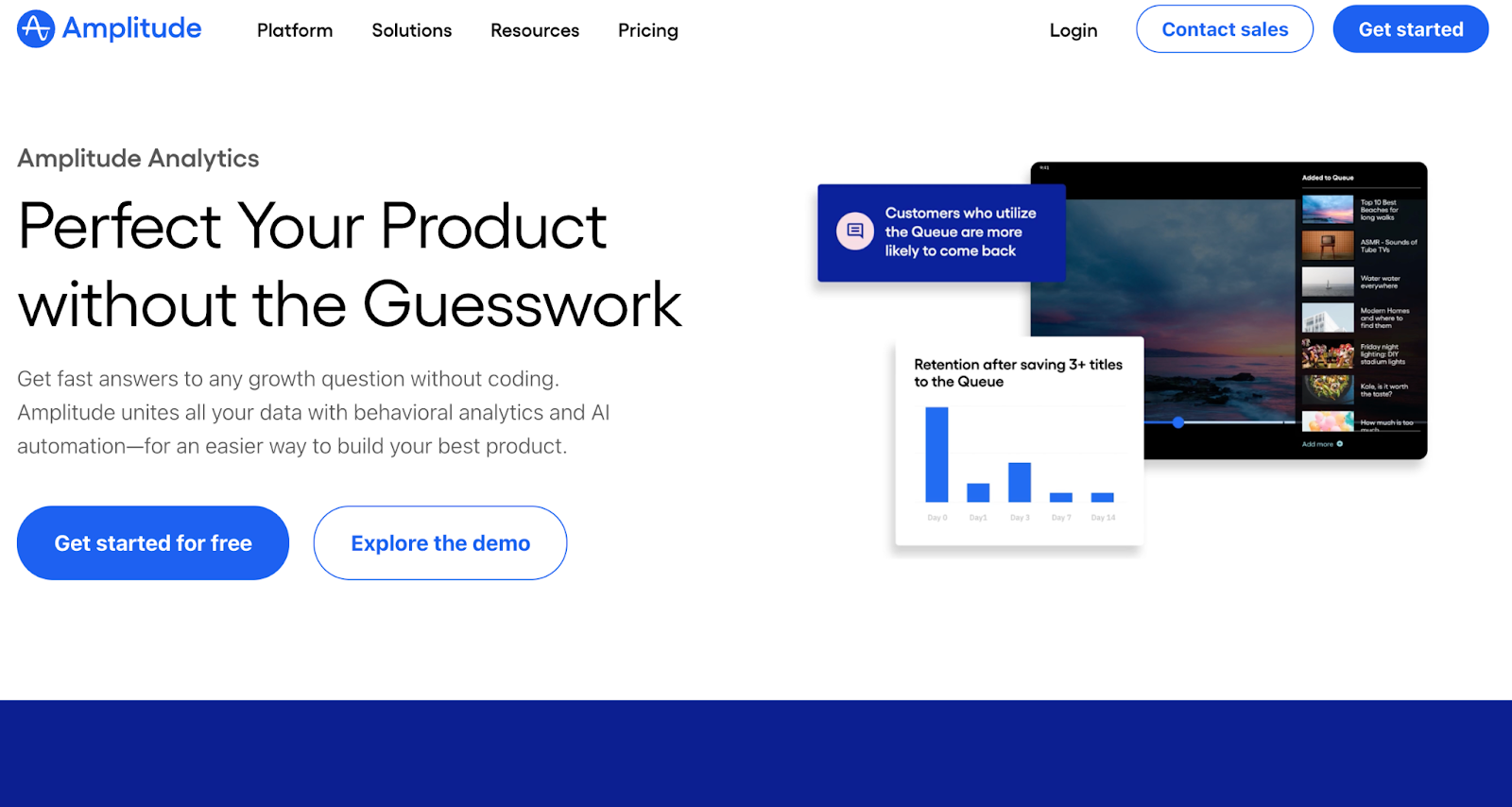
Amplitude brings behavioral analytics and AI automation together to help teams answer growth questions quickly. It unites product data with actionable insights so teams can make confident decisions and improve engagement at every step.
Amplitude allows teams to:
- Access clear insights in seconds through automated reports and visualizations
- Automate dashboard, chart, and reporting setup with minimal coding
- Monitor for issues using smart alerts that detect problems before they impact users
Specialized Tools for B2B Professional Services
Now, let’s explore some of the advanced customer journey analytics tools for B2B professional firms:
6. HubSpot Service Hub: Journey tracking with ticket and feedback integration
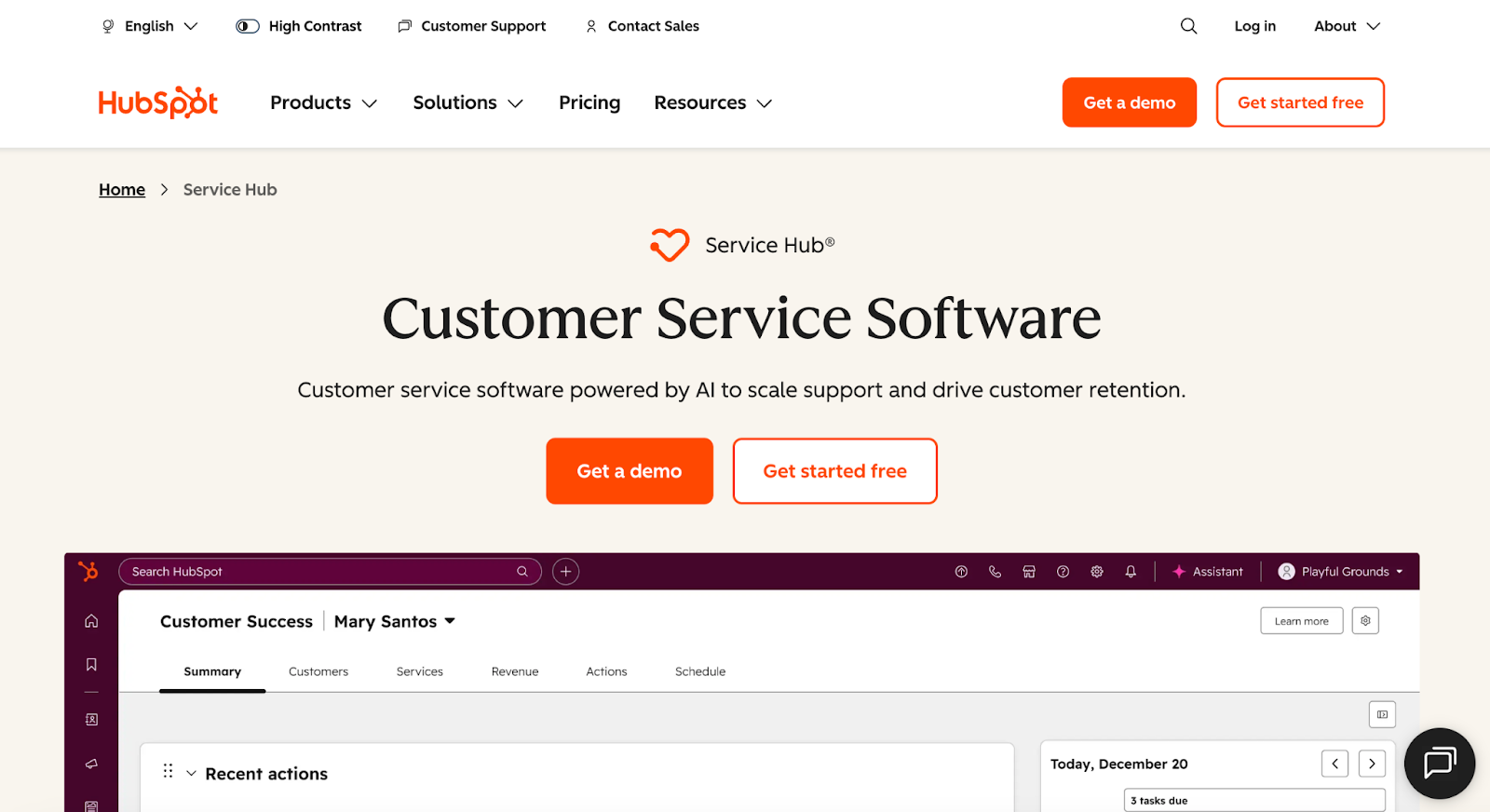
With the HubSpot Service Hub, you can manage tickets, track performance with real-time analytics, and keep customers happy with automated SLA routing. The help desk workspace makes it easy to deliver personalized support across every channel, whether phone, chat, or email, while call tracking lets your team handle complex flows and transfers.
- Gather feedback through surveys, such as NPS, and surveys
- Provide self-service tools, including knowledge bases and customer portals
- Leverage AI agents to turn solved issues into self-service resources
Plus, you can monitor customer health scores to track satisfaction trends and identify upsell or cross-sell opportunities.
7. Qualtrics CustomerXM: Experience management with voice of customer
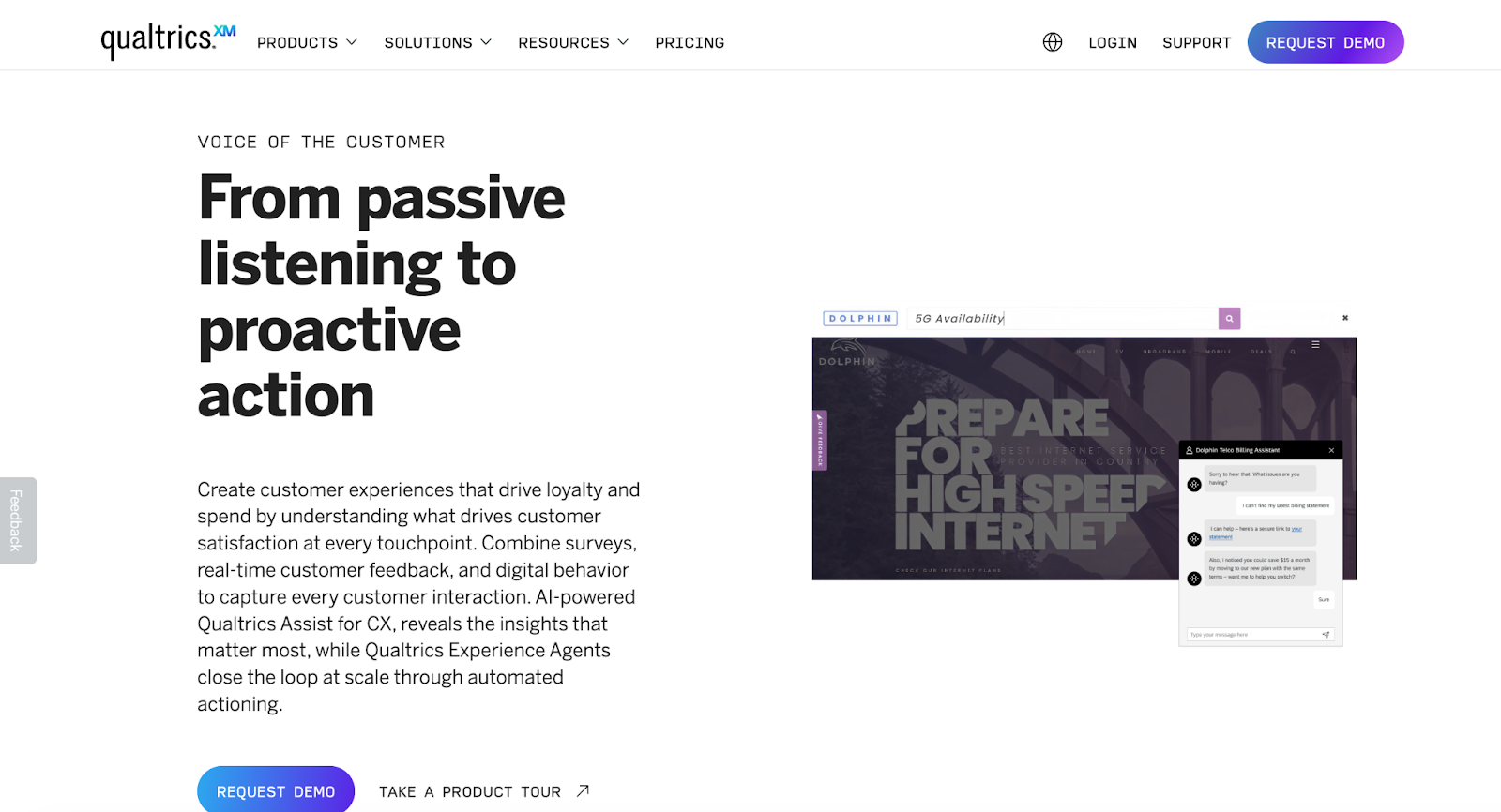
Qualtrics helps teams see exactly how customers feel by combining surveys, digital analytics, and real-time feedback in one place. You can turn complex data into clear priorities and act on insights that prevent customer frustration.
The platform helps your team in several ways:
- Predict satisfaction risks using AI tools to identify issues early
- Automate recovery by reaching at-risk customers with timely interventions
- Analyze digitally through session replays and heatmaps to spot client friction points
8. Totango: Customer success platform with health scoring
Totango helps post-sales teams turn customer outcomes into revenue growth using AI-driven insights and predictive analytics.
Here are some of the key ways Totango helps your business:
- Predict churn with AI to identify at-risk customers
- Use AI-generated summaries to view health, engagement, and attributes
- Drive retention and revenue through effective customer success management
This way, you can spot client churn risks, monitor engagement trends, and create dashboards that show exactly where your teams need to focus.
ClearlyRated: Journey Analytics Through the Lens of Client Satisfaction
To meet rising customer expectations, B2B companies can’t afford to merely, well… keep pace. They need to evolve past traditional CXM that only “measures and diagnoses” and embrace a modern, proactive approach that acts on insights, strengthens your online reputation, and uses CX to drive new business growth.
As a customer experience management (CXM) platform, ClearlyRated spots satisfaction trends early, addresses concerns before they impact revenue, and identifies expansion opportunities with always-on client insights.
Here's how we help B2B and professional services firms:
1. Industry-specific NPS surveys at critical journey milestones
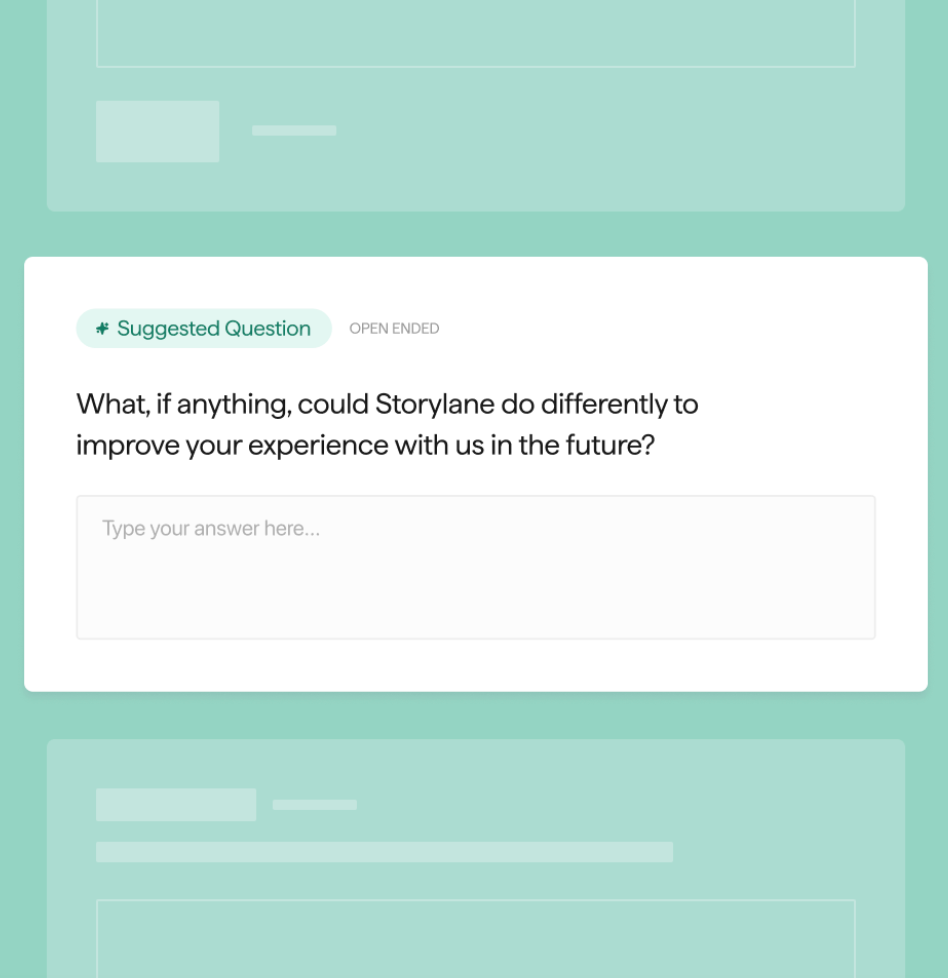
Firms that collect feedback at key client moments build stronger relationships and create more opportunities to grow accounts while strengthening loyalty. Here’s what you can do with our industry-specific NPS surveys:
- Capture real-time feedback at every important touchpoint in the client journey
- Receive immediate alerts when accounts require attention
- Identify opportunities to expand relationships before clients even mention concerns
Using B2B customer journey mapping enables your teams to connect survey insights directly to actionable improvements that drive client satisfaction.
2. Real-time alerts for at-risk client relationships
Our platform allows your team to respond immediately when client satisfaction drops or service issues arise. Real-time alerts identify problems early, helping you prevent dissatisfaction, improve service quality, and compare results against industry standards, so your organization can maintain high performance and predict potential account risks.
These actions make your decision-making faster and more precise:
- Track satisfaction trends across departments and offices
- Compare your performance to industry benchmarks
- Detect patterns in client behavior and respond quickly
3. Benchmarking your journey performance against industry standards
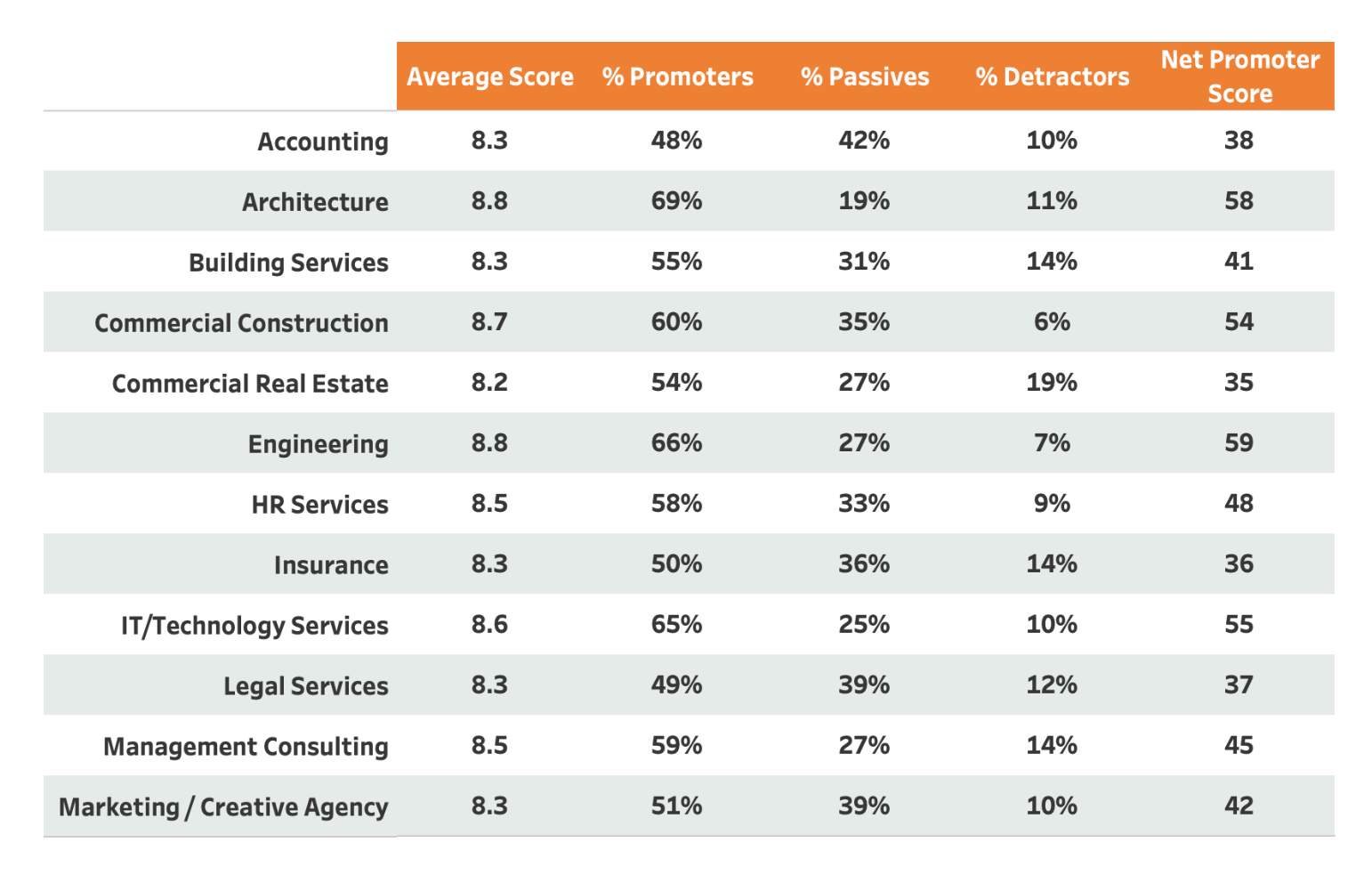
Net Promoter Scores (NPS) give firms a clear, comparable measure to track satisfaction and service quality at every level. With ClearlyRated, companies can drill down by line of business, department, or account manager to identify high-performing areas and those needing improvement.
Our Annual Survey Benchmark Study shows that the NPS of general B2B services stayed around 40 from 2021 to 2023, then rose six points in 2024 to reach 45. Improvements in meeting committed timeframes (+8 points) and service quality (+5 points) directly contributed to stronger client satisfaction and loyalty.
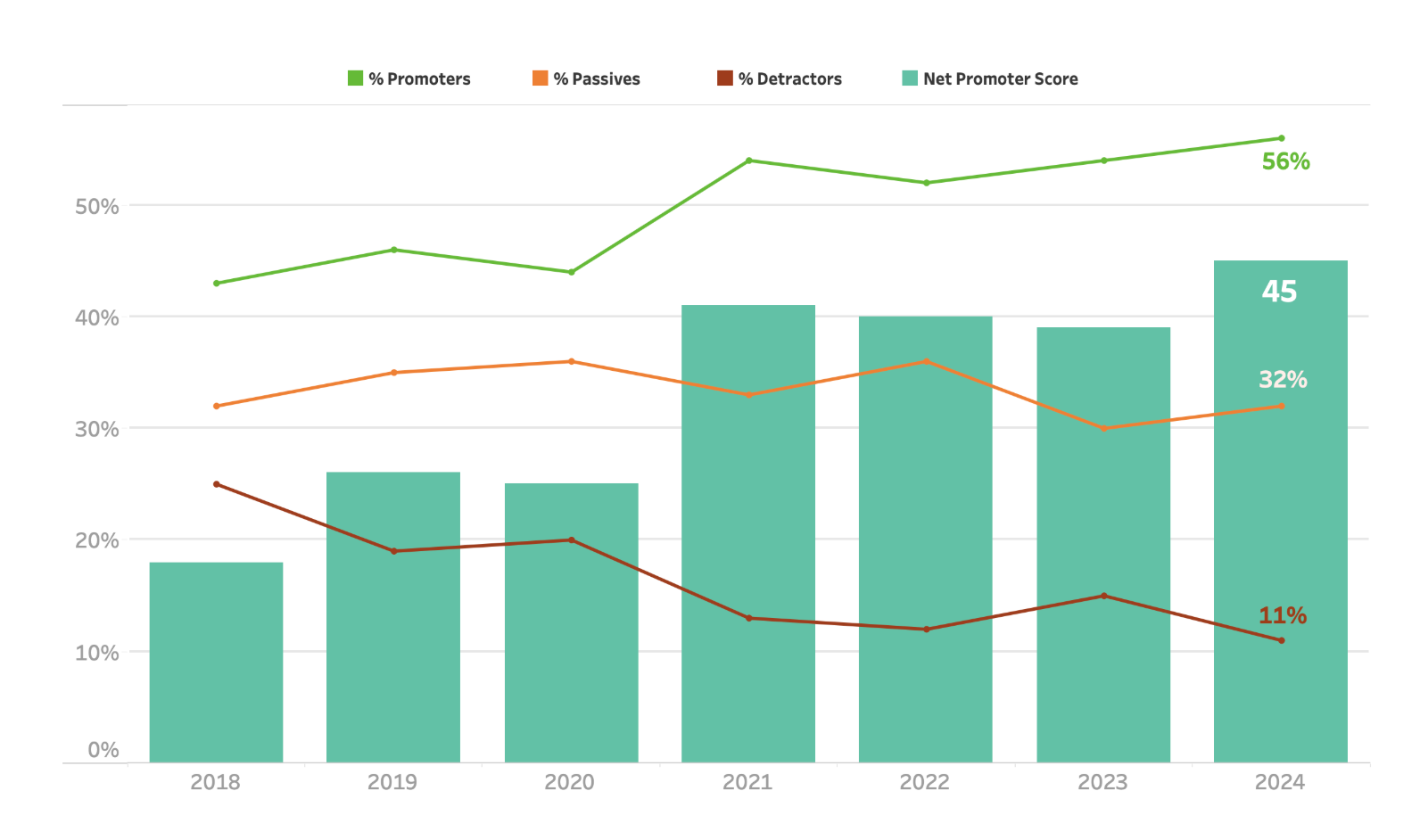
Benchmarking these results highlights exactly where your firm can celebrate successes and where teams should focus attention:
- Compare your firm against industry peers using benchmarks
- Pinpoint internal strengths and weaknesses
- Track trends in satisfaction across teams and accounts
4. Historical journey insights from 20 years of B2B service data
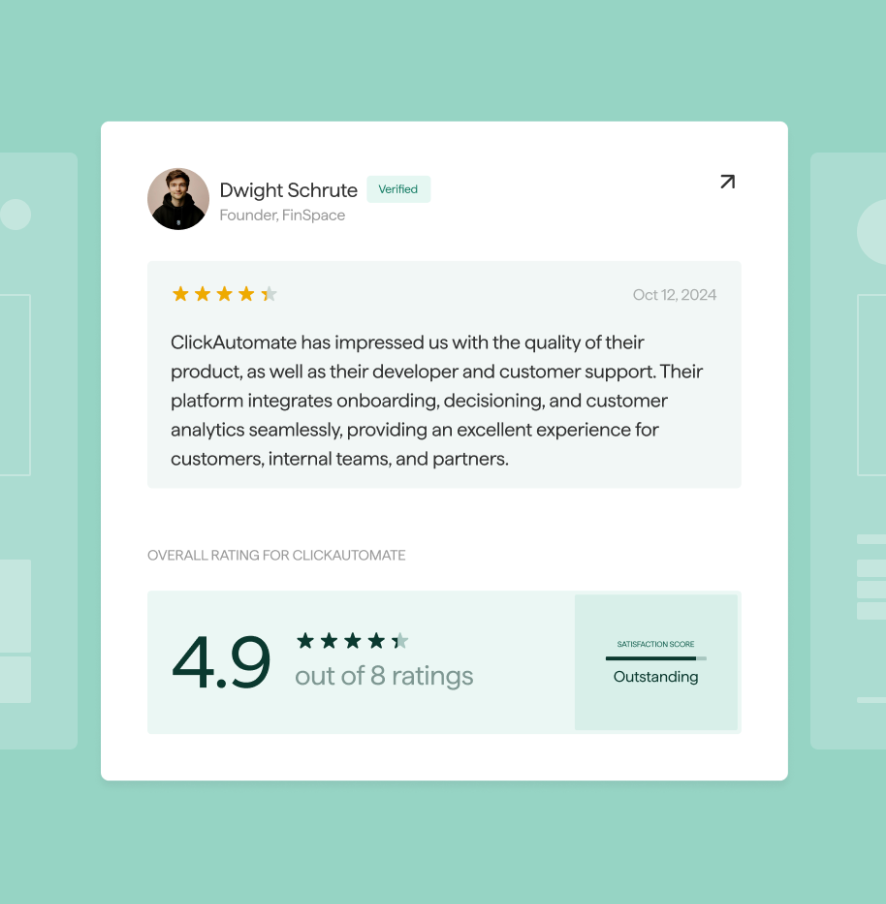
With two decades of data, we help firms show prospects their consistent performance and use verified metrics to demonstrate real service excellence. You can automatically share client testimonials, display satisfaction scores on your profile, and incorporate live service metrics into proposals to build credibility and win new business confidently.
These tools help your team show value to clients clearly:
- Display verified client feedback and success metrics
- Highlight long-term service excellence for prospects
- Present real-time performance data in proposals
5. Identifying promoters, passives, and detractors throughout the journey
Segmenting clients into promoters, passives, and detractors helps your team focus on the relationships that matter most. Our platform tracks changes in satisfaction over time and uses these insights to increase renewals, encourage advocacy, and identify service improvement opportunities across every account.
Using this information, your team can:
- Respond quickly to negative feedback
- Celebrate positive interactions
- Prioritize high-value relationships and drive referrals
Firms that use this approach create a cycle of measurable growth while demonstrating commitment to client satisfaction.
Building a Complete Journey Analytics Stack for Service Firms
Building a complete journey analytics stack enables service firms to see what drives client satisfaction and engagement. Here is how the layers work together:
Layer 1: Behavioral tracking
Watching how clients interact with your website, portal, and customer relationship management (CRM) tools gives you a clear picture of patterns that matter. With ClearlyRated, you can see which pages get attention, which accounts need follow-up, and which workflows are working well.
These insights show exactly where your clients spend their time and energy:
- Monitor website engagement and page visits with precise metrics
- Record CRM interactions to detect patterns in client communications
- Identify recurring behaviors that signal satisfaction or potential issues
Layer 2: Engagement measurement
Tracking emails, calls, and project updates gives you a clear view of how your team connects with clients and responds promptly. You can break down engagement into actionable insights:
- Track email response rates and call participation in real time
- Analyze project collaboration and task completion to spot trends
- Compare client interaction levels across accounts for focused follow-up
Layer 3: Satisfaction and sentiment
Collecting feedback gives you direct insight into how clients feel about your work. ClearlyRated captures NPS scores, written feedback, and online reviews so you can celebrate successes and address concerns before they grow.
Satisfaction insights provide clear guidance for decision-making:
- Collect NPS responses at key journey moments to track satisfaction
- Gather written feedback and client reviews automatically
- Prioritize service improvements using sentiment trends
Integration strategy: Connecting the tools for unified insights
Bringing all this information together gives you a complete view of the client experience and helps teams act decisively. Here’s what integration makes possible:
- Link behavior, engagement, and satisfaction data to spot patterns across the client journey
- Combine insights from multiple touchpoints to create actionable reports for teams and leaders
- Track trends over time to see which improvements really boost satisfaction and loyalty
When all these layers work together, firms get a clear picture of client experience, can share measurable results with stakeholders, and continuously improve service while building stronger relationships.
How to Choose the Right Journey Analytics Tool for Your Firm
Selecting the right journey analytics tool can completely change how your team understands client behavior and measures success. To do it right, here’s what you should focus on:
- Comprehensive data collection: Can the tool collect data from all your key customer touchpoints, both online and offline?
- Powerful visualization: Does it show insights in charts, dashboards, or graphs that your team can easily use?
- AI and machine learning capabilities: Can it detect patterns, predict behaviors, and provide actionable insights to support decisions?
- Seamless integration: Will it connect smoothly with your CRM, marketing platforms, and other systems to centralize data?
- Scalability: Can it grow with your business while managing more customers, interactions, and data over time?
Ultimately, the best tool lets your team understand not just what clients are doing, but why they act that way and how it impacts your business. Among all tools, ClearlyRated captures NPS, feedback, and reviews to highlight client sentiment and provide insights that improve service and loyalty.
Turning Journey Insights into Action
Turning journey insights into action means your firm stops watching data and starts changing outcomes, and that shift happens when you link insight to execution:
1. Creating intervention playbooks for at‐risk moments
When firms discover red flags in journey data, they must respond fast and effectively. For example, 76% of companies say siloed data and missing real‑time capabilities hinder their ability to act on customer signals. Building a playbook that sets out who acts, when, and how keeps your team ready.
To do this, you need to:
- Flag accounts or milestones showing drop‑off or low engagement
- Define response triggers and team actions for each at‑risk scenario
- Monitor outcomes to identify which interventions prevent churn
2. Personalizing engagement based on journey stage
Clients move through phases, and your team can tailor their engagement based on where each client is.
For example, you might send a different message to a client in onboarding than you would to one in renewal negotiation. It allows your team to match tone and content to where the client actually is in their experience.
In fact, tools that personalize experiences help companies grow revenue by around 40%.
3. Using journey data to inform service improvements
Collecting feedback, behavior, and interaction data is useful only when your teams use it to refine service. A study found organizations that integrate service insights across functions saw retention improve by 63% and brand reputation by 61%.
This means your services must evolve based on what the journey data reveals.
The Journey Analytics Stack for Modern B2B Service Firms
Your customers are constantly sending signals through clicks, purchases, and feedback. Listening closely and acting on these signals can completely change how they feel about your brand. To make the most of these insights, build a journey analytics stack that gives your teams clarity and practical guidance.
At ClearlyRated, we help capture real-time customer feedback and sentiment so you always know what your clients are thinking. Plus, our platform connects all touchpoints and turns complex data into easy-to-read insights that drive smarter business decisions.
Get started with us today and turn every interaction into measurable growth and happier clients.
FAQs
What's the difference between customer journey analytics and customer satisfaction surveys?
Customer journey analytics tracks every client interaction to reveal patterns and behaviors, while satisfaction surveys capture direct feedback at specific points. Tools like ClearlyRated can combine both approaches to provide a comprehensive understanding of client experiences.
Do B2B service firms need different journey analytics tools than ecommerce businesses?
Yes, B2B service firms often handle longer, more complex client relationships. As a client experience and reputation management platform, ClearlyRated focuses on ongoing feedback, touchpoints, and service outcomes, unlike ecommerce tools that prioritize fast transactions.
How do you measure client satisfaction at different journey stages?
You can measure satisfaction by collecting feedback after key milestones, analyzing touchpoint interactions, and monitoring trends over time. Platforms like ours make it easy to track satisfaction throughout onboarding, support, and ongoing service delivery.

FAQs








.webp)






.png)

%20(1).png)

.webp)
.png)





%5B1%5D.webp)






.png)









_%20The%20Ultimate%20Guide.png)


.png)




%20in%20the%20Workplace.png)




.png)

%20and%20how%20can%20you%20increase%20it.png)
_%20A%20Step-by-Step%20Guide.png)

.png)
.png)

