Customer Experience Insights: Definition, Best Practices & Strategic Impact

.webp)
- Customer experience drives loyalty and revenue, because every interaction shapes whether someone stays, spends more, or walks to a competitor. Research shows 73% of customers rank experience as a key factor in purchase decisions.
- Understanding both behavioral and emotional insights reveals what customers value, where they struggle, and which moments delight or frustrate them.
- ClearlyRated centralizes feedback, automates surveys, and provides real-time alerts, turning insights into action so teams can spot risks early, strengthen relationships, and uncover opportunities for growth.
- Using insights across touchpoints helps personalize experiences, reduce churn, and gain a competitive edge.
Your team spent $50K on a product update based on “gut feel.” Three months later, customer satisfaction dropped 12%. The problem is that you did not ask customers what they actually wanted.
Every time a customer is disappointed, you risk losing a loyal buyer to a competitor. A single positive or negative moment can determine whether someone becomes a loyal advocate or walks straight to a competitor. Every time you fail to impress a customer, you lose a prospect who could have supported your brand, and your competitors benefit.
Research shows that 73% of customers rank customer experience as a key factor in purchase decisions. Additionally, companies that prioritize experience can boost revenue compared to those that don’t. In a market where products and prices are easy to compare, customer experience insights have become the ultimate differentiator. They reveal behavior, sentiment, and unmet needs, which allows businesses to design more meaningful, loyalty-driving engagements.
Today’s leading brands treat customer experience strategy as a core driver of growth, not just a support function. Businesses that leverage data, empathy, and actionable feedback outperform peers in loyalty and revenue. To stay competitive, you must commit to understanding customers at every touchpoint.
This article explains what customer experience insights are, why they matter, how to collect and use them, best practices for analysis, and how they fuel CX insights for business growth.
What Are Customer Experience Insights?
Customer experience insights are the meaningful patterns, trends, and discoveries you get when you analyze customer behavior, preferences, opinions, and interactions across all touchpoints in the customer journey. These insights come from feedback surveys, support interactions, CRM data, online behavior, purchase history, and contextual analytics.
They tell you not just what customers do, but why they do it. They give teams a factual basis for decisions, replacing assumptions with evidence.
Here’s why it matters:
- Reveal what customers truly value
- Identify pain points and areas where customers struggle
- Highlight moments that delight customers
- Uncover moments that drive customers away
With accurate customer data insights, teams gain a clear understanding of customer needs, can personalize every interaction, and deliver value that strengthens relationships. In fact, research shows that 82% of consumers link consistent, excellent care to loyalty. This proves that prioritizing experience directly drives repeat business and lasting connections.
Types of Customer Experience Insights
To make the most of customer feedback and data, you must recognize the main categories of insights.
Behavioral insights
Behavioral insights reveal what customers actually do. This includes how they browse your site, which features they use, the frequency of purchases, and the points at which they disengage.
For example, if data shows that users abandon checkout at a particular step, you can target that moment with design improvements or clearer instructions.
It also forms the backbone of customer journey mapping, enabling companies to visualize and optimize each phase of the journey.
Emotional insights
Behavioral data must pair with emotional context to explain why customers act the way they do. Emotional insights come from surveys, sentiment analysis, and natural language processing tools that analyze tone and feeling.
These insights reveal how customers truly feel. For example:
- Do they find your onboarding confusing?
- Do they feel supported?
- Do they feel frustrated when trying to resolve an issue?
- Do they trust your brand to deliver on its promises?
Emotional feedback directly influences satisfaction, loyalty, and long-term relationships.
Operational insights
Operational insights expose conflict in your processes, systems, and touchpoints. They often come from combining customer complaints, support tickets, and performance metrics.
For instance, if support wait time rises, operational insights reveal a challenge that harms customer satisfaction. Fixing that improves the overall experience and strengthens customer retention strategies.
📌Also read: 11 Best Customer Retention Software of 2025
Why Customer Experience Insights Matter
Understanding the types of insights is one thing. Let’s break down exactly what they do for your business.
Drive smarter business decisions
Teams armed with data make better decisions than teams guided by intuition. When you know what customers value most, you can prioritize investments that yield real returns. Many companies now use predictive analytics in CX to forecast churn before customers cancel. This gives teams the opportunity to step in and protect revenue.
McDonald York Building Company brings this approach to life. By partnering with ClearlyRated, the team systematically collected and acted on client feedback through the Client Savvy platform. Leaders integrated these insights into weekly meetings, Slack conversations, and executive dashboards, providing the organization with clear visibility into client priorities and areas for improvement.
As a result, leadership made smarter, insight-driven decisions, increased gross profit margin by 15%, and built stronger, more transparent client relationships.
Improve customer satisfaction, loyalty, and retention
Satisfied customers return, and loyal customers stay longer. When brands listen to what customers say and observe how they behave, they can tailor experiences that feel personal instead of transactional. This relevance builds trust, strengthens relationships, and reduces customer churn.
Research consistently shows the impact of this approach. Personalization can increase customer satisfaction by as much as 35%, which directly supports higher retention, repeat purchases, and long-term revenue growth.
Increase revenue and reduce churn
Customers who feel understood spend more and stick around longer. Personalization drives both initial purchases and repeat business. Research indicates that happy, returning customers spend 67% more than new ones, making loyalty a powerful revenue driver.
TekCom Resources illustrates this impact clearly. After partnering with ClearlyRated, the team gathered reliable feedback from both clients and candidates and tracked experience using Net Promoter Score (NPS). We turned those insights into clear actions that elevated their brand and improved experiences at every touchpoint.
In the end, our combined effort paid off with a 9% drop in candidate falloffs, an 18.6% lift in gross profit margin, and a 50% increase in referrals, showing how structured CX insights drive retention and long-term growth.
Gain a competitive advantage
Companies that deliver great customer experiences are harder to replace. When organizations consistently deliver seamless, personalized journeys informed by real customer feedback, competitors struggle to win customers away.
You see this in brands like Amazon, where personalized recommendations alone account for 35 % of its total revenue, driven by customer engagement and recurring purchases.
Empower teams with the “why” behind their work
Customer experience insights connect day-to-day actions to business outcomes. When your service, marketing, product, and leadership teams all access the same customer feedback analysis, they make aligned decisions with confidence.
Instead of relying on intuition, teams understand why customers behave the way they do and how their actions influence satisfaction, loyalty, and growth. Ultimately, customer voice becomes an actionable strategy, not just data.
How to Use Customer Experience Insights
Collecting customer data is just the first step. The real power comes from turning insights into action, using what you learn to make every interaction, product, and journey better.
- Personalize customer interactions: Customers expect experiences that match their interests, preferences, and history. In fact, 78% of customers say they expect more personalization than ever before. Use insights to tailor messaging, offers, and support for each individual. When interactions feel personal, loyalty grows, and the value of every customer relationship increases.
- Improve products and services: Customer insights reveal both what delights and what frustrates. Use this information to prioritize product improvements and service enhancements. For example, product teams can leverage sentiment analysis to identify features customers love and focus resources on those that drive the most impact.
- Optimize the customer journey: A poorly designed journey can lose customers at every stage. By mapping touchpoints against feedback and behavior, you can identify bottlenecks and streamline the experience. Data-informed journey maps let you prioritize improvements that matter most to customers, creating smoother, more satisfying experiences.
- Enable real‑time decision-making: Modern voice-of-the-customer (VoC) data platforms give almost instant insights. AI-driven analysis can flag negative trends immediately, giving teams the chance to act before problems escalate. This approach allows organizations to intervene proactively, resolving issues as they happen.
Best Practices for Collecting & Analyzing CX Insights
Getting deep insights requires intentional methods. Here’s how customer experience management software like ClearlyRated turns customer feedback into actionable growth.
Collect data from multiple touchpoints
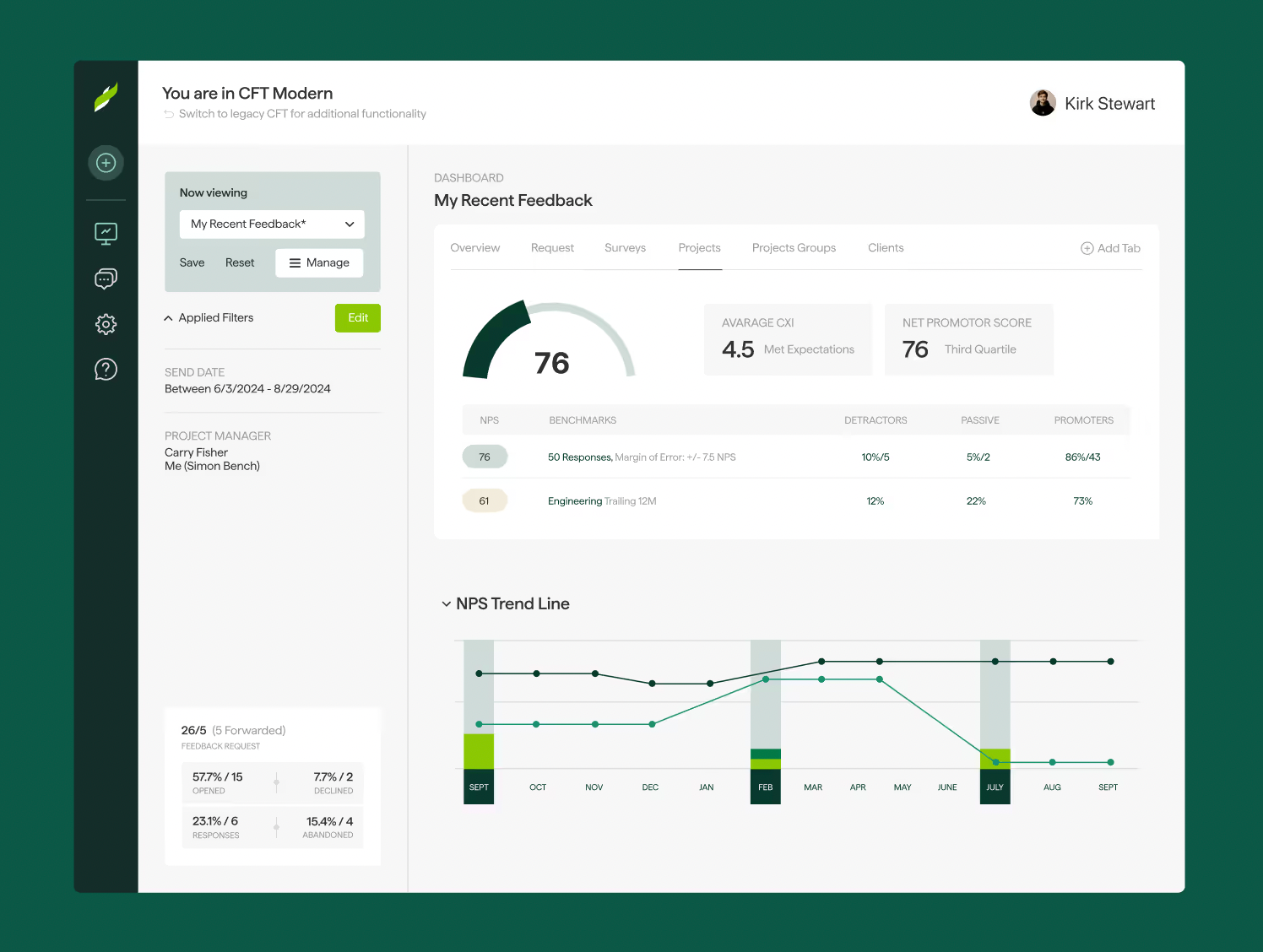
Every customer interaction provides insight, but no single touchpoint tells the whole story. By collecting data from all channels, you can build a complete picture of the customer journey, spot patterns, and identify moments that matter most.
Our platform allows teams to gather feedback from every service line, ensuring nothing is overlooked while maintaining a continuous flow of actionable information.
Use advanced analytics tools
Once collected, data must be analyzed to uncover meaningful patterns. AI and automation can process unstructured data like survey responses, chat logs, and open-ended comments, revealing themes, sentiment, and hidden opportunities.
Our platform goes further by turning these insights into actionable recommendations, helping teams anticipate risks, strengthen relationships, and discover growth opportunities.
Implement regular feedback loops
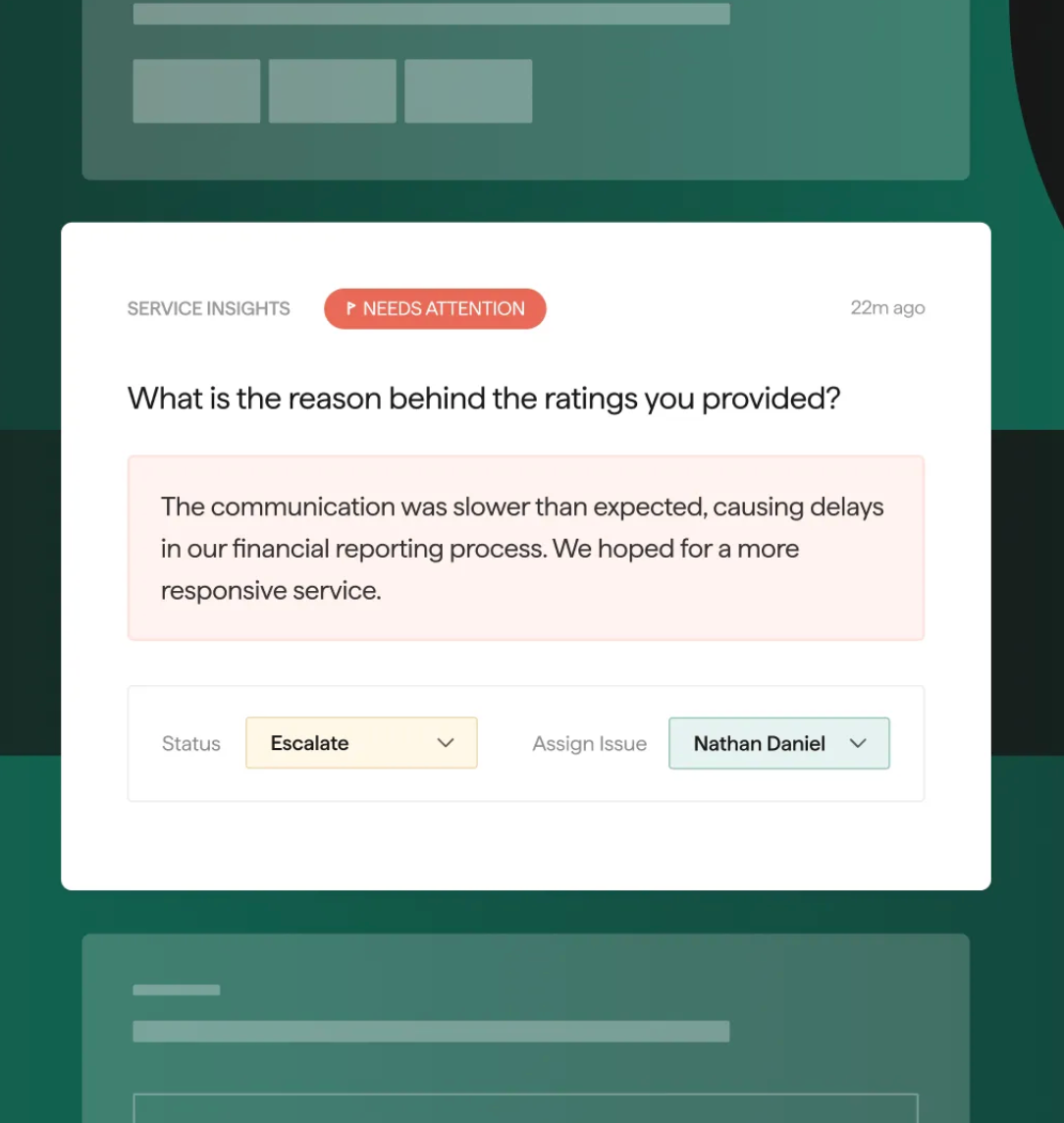
Insights are only useful if they are ongoing rather than occasional. Regular feedback ensures your team stays ahead of customer needs and can act before small issues become big problems.
ClearlyRated automates surveys throughout the client lifecycle, providing a steady stream of feedback and enabling teams to proactively course-correct, improve experiences in real time, and identify expansion opportunities.
Segment your audience
Not all customers are the same, and their needs and behaviors vary. By segmenting clients by demographics, behavior, value, or lifecycle stage, you can tailor analysis and actions for maximum impact.
Segmentation allows teams to focus on what matters most for each group and turn insights into confident growth decisions.
Ensure data quality and consistency
Accurate insights depend on accurate data. Conflicting, duplicated, or incomplete information can lead to poor decisions and missed opportunities.
By unifying data across systems, your team works from a single source of truth, ensuring every decision is based on reliable, comprehensive information.
Foster cross‑department collaboration
Insights are most powerful when shared. Marketing, support, product, and leadership teams benefit when everyone has access to the same real-time feedback and analysis.
We help organizations distribute insights across teams while providing guidance on interpretation, so every department can act in alignment to strengthen customer relationships.
Train and upskill your team
Tools are only as effective as the people using them. Training teams to understand, interpret, and act on data ensures insights translate into real improvements and proactive client engagement.
We support this with industry-proven playbooks and dedicated success managers, helping teams embed best practices from day one.
Measuring the ROI of Customer Experience Insights
Tracking metrics helps quantify the value of experience initiatives. Essential customer satisfaction metrics include:
- Net Promoter Score (NPS)
- Customer Effort Score (CES)
- Retention and churn rates
- Lifetime value (LTV)
- Repeat purchase rate
These metrics tie experience improvements to business outcomes like revenue and loyalty.
To show ROI, link improvements in retention or satisfaction to changes in revenue. For instance, reducing churn by just a few percentage points often yields measurable financial gains, especially in subscription and SaaS businesses.
Ready to Take Action on Customer Experience?
Companies that succeed in 2026 and beyond treat customer experience insights as a strategic asset. They analyze data from all touchpoints, combine emotional and behavioral analytics, and use those insights to design journeys that delight.
ClearlyRated makes this possible by automating surveys, centralizing feedback, and providing real-time alerts on client satisfaction. With us, teams can transform feedback into actionable insights, spot risks before they escalate, proactively strengthen relationships, and uncover opportunities for growth, all while validating success with verified ratings, testimonials, and industry awards. As a next step, start embedding a continuous feedback rhythm in your organization.
What would change in your business if you could predict customer churn 60 days before it happens? Stop guessing what your customers want. ClearlyRated automates feedback collection, provides real-time alerts, and turns insights into growth. See how in a 15-minute demo.
FAQs
What are the key benefits of understanding customer experience insights?
Understanding customer experience insights plays a crucial role in achieving customer experience success. They help your business make smarter, data-driven decisions instead of relying on assumptions. These insights enable personalization and CX, allowing you to tailor interactions so each customer feels recognized and valued. By acting on them, you also help improve the customer experience across all touchpoints.
How can CX insights improve customer loyalty?
CX insights reveal what customers truly value and where they encounter friction. This makes experience optimization possible, letting you address pain points before they escalate. With these insights, you can create more meaningful interactions and consistently exceed expectations. Strategic CX implementation ensures every action builds loyalty and strengthens long-term relationships.
What tools can help gather customer experience insights?
You can gather CX insights using CRM systems, VoC platforms, predictive analytics engines, and survey tools. Our platform makes this even easier by centralizing survey responses from every touchpoint, analyzing sentiment, and providing actionable insights in real time. This allows teams to spot trends, identify risks, and proactively improve the customer experience.
How can I measure the impact of customer experience on my business?
To measure CX impact, track key metrics such as customer satisfaction, retention rates, churn, and revenue growth linked to CX initiatives. We automate this process by providing dashboards that connect client feedback with measurable outcomes. This approach turns data into actionable insights for strategic CX implementation and ensures that improving customer experience translates to measurable growth.
What are the main challenges businesses face in leveraging CX insights?
Businesses often struggle with siloed data, inconsistent feedback collection, and difficulty translating insights into actionable strategies. We help overcome these challenges by centralizing feedback, standardizing data collection, and enabling teams to act quickly.

FAQs














.png)

%20(1).png)
.webp)
.png)





%5B1%5D.webp)





.png)







_%20The%20Ultimate%20Guide.png)


.png)




%20in%20the%20Workplace.png)




.png)

%20and%20how%20can%20you%20increase%20it.png)
_%20A%20Step-by-Step%20Guide.png)

.png)