Creating Ideal Client Profiles: How to Attract Your Best-Fit Clients


- Every B2B firm has clients who fit perfectly and clients who drain resources, and the difference comes down to having a clear ideal client profile.
- By studying your top accounts, you can define traits such as industry, budget, decision-making style, and satisfaction patterns to consistently target best-fit clients.
- Firms that align on ideal client profiles see measurable results, with 67% of high-performing companies exceeding revenue goals with documented ICPs.
- Collecting feedback through structured client feedback programs and ClearlyRated’s CXI® scoring reveals hidden pain points and patterns that reveal true client fit.
- Activating your ICP across sales, marketing, and CX teams lets you attract ideal clients, improve retention, and directly link CX impact to revenue.
There are two kinds of customers in every B2B company:
- First, businesses that are timely with payments, that respect scope, that trust your expertise, and that refer associates. Account managers like working with these customers very much since the revenues increase consistently, and renewing the account is almost automatic.
- The second type of customer negotiates each invoice, questions every recommendation, delays decisions, and churns in less than one year. Accounts teams feel exhausted working with these customers, profit margins decrease, and no referrals come from these relationships.
But perhaps you’re still wondering what this looks like in real life. Let’s say you’re a mid-sized consulting firm that lands 10 new accounts in a quarter. Of these 10, six grow out in six months and expand their scope by 30%. The other four dispute every milestone, demand free revisions, and leave before renewal. The leadership team looks at the revenue report and asks what happened.
The difference often comes down to fit.
Companies that establish an ideal client profile (ICP) attract more of the right customers while pushing away the wrong ones. However, many B2B services companies still rely on instinct rather than using data. This guide offers CX and business development leaders everything they need to build an evidence-based ICP to increase retention, revenue, and satisfaction.
What Is an Ideal Client Profile?
An ideal client profile, or ICP, is a detailed description of the type of company or client that gains the most value from your services and delivers the most value back to your firm.
It answers a simple but powerful question: Which organizations make us profitable, proud, and eager to renew?
Strong ideal client profiles include:
- Firmographics such as industry, size, geography, and growth stage
- Budget capacity and revenue potential
- Strategic priorities and operational challenges
- Cultural alignment and communication style
- Satisfaction patterns and feedback trends
Many teams start with an ideal client profile template, but the template only works when it reflects real client data rather than assumptions.
When firms clarify ideal client profiles, they shift from reactive selling to deliberate growth.
ICP vs. buyer persona: What is the difference?
As we mentioned earlier, an ICP describes the company you want to work with. It focuses on firmographics, budget range, industry focus, and engagement style.
In contrast, a persona describes the individual decision-maker within that company. It covers role, goals, performance metrics, and pain points.
You must define the account before you craft messaging for the individual. That is why ideal client profiles come first. In fact, teams that align on ICPs and insights exceed revenue targets 58% more often, making coordination important for B2B companies.
Why Ideal Client Profiles Matter for B2B Service Firms
An ideal client profile (ICP) is important because it helps you focus on the companies most likely to buy your services and stay profitable over time. A strong ICP informs everything, from prospecting to qualification to pitching, and it shapes how your teams allocate time, energy, and resources.
The key to creating a successful ICP is specificity. You won’t target everybody that weakens your message, wastes your team’s time, and ultimately lowers your win rates. Here’s why client profiles matter for B2B service firms:
Gives better customer retention
Clients who align with your ICP stay longer, spend more, and refer others. When your team brings in clients who clearly get value from what you sell, those clients are easier to serve, they renew more consistently, and they become sources of organic growth. You can strengthen this by implementing structured client feedback programs to understand client needs and improve retention.
Conversely, clients that fall outside your ideal profile tend to churn faster, cost more to serve, and damage team morale as account teams struggle to meet misaligned expectations. When you implement client retention strategies, your team proactively retains high-value clients and reduces churn.
More efficient business development
Without an ICP, business development teams go after every opportunity, thereby wasting time and resources on poor‑fit prospects that rarely convert. A clear profile helps your business development teams qualify leads faster and focus on accounts that fit your value proposition and budget thresholds.
This alignment improves coordination between sales and marketing, shortens sales cycles, and lets your teams spend more time on prospects with genuine potential to become loyal customers. It mirrors how top firms identify best-fit clients to maximize success.
Stronger client experience from day one
When you know who your best clients are, you can customize your onboarding, communication, and service delivery to their expectations right from the start. A well‑defined ICP tells you not just what companies look like on paper, but how they behave, what they value, and how they expect to be engaged.
That level of understanding translates into smoother onboarding, clearer communication, and a better overall experience, all of which improve retention and satisfaction. ICP‑aligned companies are better positioned to deliver a client experience that resonates because they build their processes around known success patterns instead of hoping to improvise once a misfit client shows up.
6 Key Components of an Ideal Client Profile
We’ve already covered what an ICP means and why it matters. Now, it’s time to break it down further and look at the building blocks that make a strong ICP truly effective.
However, it’s important to remember that a good ICP isn’t just one data point. It’s a combination of signals layered together. If you miss one layer, you either widen your net too much or filter out good opportunities too early. The most effective ICPs combine quantitative criteria with qualitative understanding to recognize high‑fit accounts early and consistently.
Here are the key components you should pay attention to:
1. Firmographics
Firmographics are the foundational details about a company that help you quickly qualify whether a lead fits your ideal customer profile. These include:
- Industry: The sector the company operates in (e.g., fintech, healthcare, logistics)
- Company size: Employee count or organizational scale
- Revenue: Annual revenue range or growth trajectory
- Geography: Where they’re headquartered or operate
- Funding stage: Bootstrapped, Series A/B, or enterprise‑level organizations
For example, if you sell enterprise HR software, a 50‑person startup might not be a fit. But a 2,000‑employee company expanding globally is likely ideal. Firmographics help you rule out non‑fit accounts before wasting time on them.
2. Budget & revenue potential
A strong ICP captures the typical budget range and revenue potential of accounts that deliver value to both sides. This includes:
- Average contract value: What you can realistically charge and expect to be profitable
- Willingness to invest: Whether the company typically buys premium service tiers or only low‑cost, entry‑level options
- Expansion potential: How likely the account is to grow its spending over time
Knowing typical contract economics and budget patterns lets your business development and pricing teams set realistic expectations early in the sales cycle.
3. Pain points and needs alignment
It is equally important to identify the key pain points your best customers face and align them with the problems your services solve best. Misalignment here drives early churn in B2B service relationships.
When your team understands the problems your services solve consistently, you can craft messaging that addresses those issues directly and builds trust quickly.
4. Decision-making structure
Different companies make buying decisions very differently. Your ICP should capture:
- Who signs off on purchases: Titles or roles involved in procurement decisions
- How long the decision process takes: Shorter, clearer decision‑making cycles tend to lead to faster wins and higher lifetime value
- Typical approval workflows: Whether procurement, finance, and operations all need sign‑off
In fact, firms with clearer decision‑making structures often deliver faster onboarding and more predictable revenue streams, while complex or ambiguous processes slow deals and strain internal resources.
5. Relationship & communication style
Do your best-fit clients value proactive communication? Do they prefer structured weekly updates or a more hands-off approach once contracts start?
Cultural and communication alignment drives results. However, many teams overlook it. Up to 25% of clients have unvoiced complaints, and 7% are at risk of leaving. Clients that match your engagement style create less friction and achieve higher satisfaction, even when the work becomes complex.
When your team improves customer experience metrics such as Net Promoter Scores (NPS) and CX scores, retention and expansion become easier. You can use client feedback software built specifically for professional services firms to capture silent complaints, hold your team accountable for timely responses, and turn feedback into action before clients leave.
For example, B2B service firms with strong CX leadership retain customers at significantly higher rates and achieve up to 1.5x customer lifetime value (CLV).
6. CX & satisfaction indicators
Finally, look at how past clients have rated their experience with your firm. Feedback metrics, such as NPS and broader customer satisfaction frameworks, help you identify patterns in who consistently delivers referrals, repeat business, and positive testimonials.
For example, our 2024 NPS® Benchmarks for the B2B Services Industry show that firms raised their average NPS to 45, up six points from 2023, by delivering services on time and improving service quality.
The CXI®, a seven-point scale, uncovers 380% more pain points than NPS alone. It lets teams identify and address hidden challenges before they escalate.
By tracking these indicators, firms refine their ICP based on real client behavior and satisfaction trends, creating stronger and longer-lasting client relationships.
How To Build Your Ideal Client Profile: A Step by Step Guide
Customer profiles deliver tremendous value, but the process can feel overwhelming if you’ve never mapped your audience before.
Here’s a step-by-step guide on how to create an ideal client profile:
Step 1: Analyze your best existing clients
Your top clients hold the key to your firm’s growth. It’s no wonder the most successful firms pay close attention to the 10–20% of clients who deliver the highest revenue, retention, profitability, and satisfaction. To uncover what makes these clients stick, study their industries, company sizes, engagement patterns, communication preferences, and NPS or CXI® scores.
These insights reveal the traits that drive loyalty and growth, showing you which clients naturally align with your services. When you connect these patterns, you understand how your firm consistently creates value, and you lay the foundation for your ideal client profile.
At ClearlyRated, our platform helps you easily gather and analyze this feedback. Whether you train your team or leverage our managed services, we make sure your program runs smoothly and drives real results.
Step 2: Identify your worst‑fit clients
Understanding who doesn’t fit your firm is just as important as knowing your top performers. So, start by pulling the list of clients who churned early, showed low satisfaction signals, or required high effort with little return. Look for patterns in firmographics and behaviors that differ from your best accounts.
You may notice certain industries consistently push back on value, or that some engagement styles create friction during delivery. When you study this group, it sharpens your client profiling strategy, because it shows you not just who to pursue but also who to avoid.
Step 3: Gather feedback data
Once you know who fits and who doesn’t, it’s time to gather structured feedback. Implement NPS surveys, schedule regular CXI® assessments, and conduct milestone check‑ins to capture client experiences at every stage.
This approach allows you to track NPS benchmarking across segments and see how satisfaction trends link to retention, referrals, and expansion, directly measuring CX impact on revenue.
When you ask the right questions and monitor responses over time, you uncover what drives delight and what causes dissatisfaction. This feedback validates the patterns you found in Steps 1 and 2 and refines your understanding of client traits.
Step 4: Document the profile
Now it’s time to turn insights into a clear reference. Document the ideal customer profile examples that emerge from your analysis. Here’s where you can include:
- Firmographics
- Behavioral traits
- Communication preferences
- Satisfaction benchmarks like typical NPS and CXI® scores
You can also add notes on decision-making structures, budget ranges, and how your best clients engage with you.
Make this ICP accessible to business development, account management, and CX teams so everyone works from the same definition of fit. Writing it down transforms instinct into evidence and completes the foundation for ICP for B2B services.
Step 5: Activate across teams
With your ICP for B2B services documented, put it to work across your organization. Use the profile to target accounts that match your success patterns and customize proposals based on the traits and priorities you’ve identified.
Tailor onboarding to set clear expectations with high‑fit clients from Day One, and embed the ICP into ongoing service delivery so account teams know which communication styles, check‑in cadences, and value metrics resonate most. Aligning business development, account management, and service teams around the ICP turns your ideal customer profile examples into a shared language of fit.
Common Mistakes When Building Ideal Client Profiles
Even after building a solid ICP for B2B services, teams can slip up if they overlook precision, data, or client experience.
These common mistakes can turn a promising profile into a roadmap that misses the mark.
- Making it too broad: An ICP that says “any mid-market company” is too vague to guide your team. Specificity drives results. Hence, you must focus on the traits, behaviors, and satisfaction patterns that define your best clients. Narrowing your scope makes your client profiling strategy actionable and effective.
- Relying on gut feel over data: Building an ICP based on assumptions or instinct alone leads to misalignment. The most successful firms use client feedback, performance metrics, and NPS benchmarking across segments. Data-driven profiles outperform assumption-based ones, giving you a clear roadmap for how to create an ideal client profile that works in the real world.
- Setting it and forgetting it: You can’t just set your ICP document and then forget it. Markets shift, services evolve, and client expectations change. You have to revisit and refine your ICP at least annually using updated feedback, performance data, and CX insights. This keeps your ideal customer profile examples relevant and ensures you continue measuring CX impact on revenue.
- Not involving CX data: Many BD teams build ICPs without input from client experience teams, missing behavioral and satisfaction signals. Incorporating CX data completes your ICP for B2B services, helping you see which clients engage best, deliver the most value, and align with your growth goals. Without it, you risk chasing clients who don’t truly fit.
How ClearlyRated Helps You Build Data-Driven Ideal Client Profiles
To turn client insights into actionable intelligence, you need a system that captures real feedback, identifies patterns, and drives decisions.
At ClearlyRated, we help professional services firms go beyond gut feel to build an ICP for B2B services grounded in real client data. Our platform seamlessly integrates with the client journey, helping you measure satisfaction, close the feedback loop, and strengthen client loyalty.
Below are the ways our platform empowers you to turn client feedback into precise, data-driven intelligence:
1. CXI® scoring
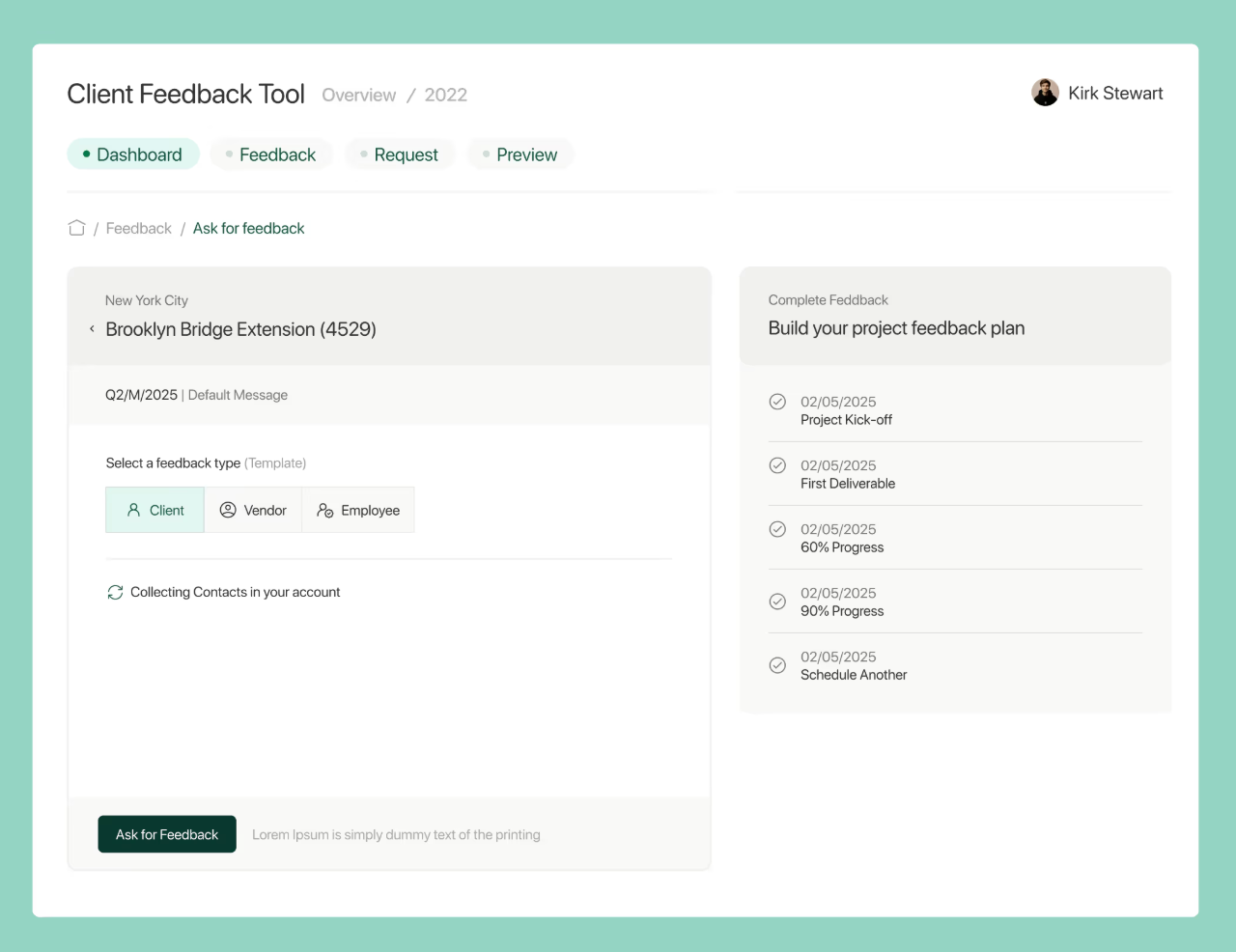
Our platform uses survey question models tested across thousands of architecture and engineering firms over the past 20 years. These surveys form the backbone of our Voice of Customer (VoC) programs, encouraging clients to provide detailed and honest feedback.
The patented Client Experience Indicator (CXI®) scale uncovers up to 380% more hidden pain points than NPS alone. Technology alone doesn’t guarantee results. Firms that prepare teams, refine processes, and reinforce value see faster adoption and stronger business outcomes.
2. NPS benchmarking
Our platform also excels in client feedback and NPS management, offering clear, actionable metrics that help service-based firms enhance client satisfaction and retention.
With a focus on professional service industries, the platform provides tailored feedback solutions that reveal which clients align best with your services and which areas need improvement.
3. Real-time dashboards
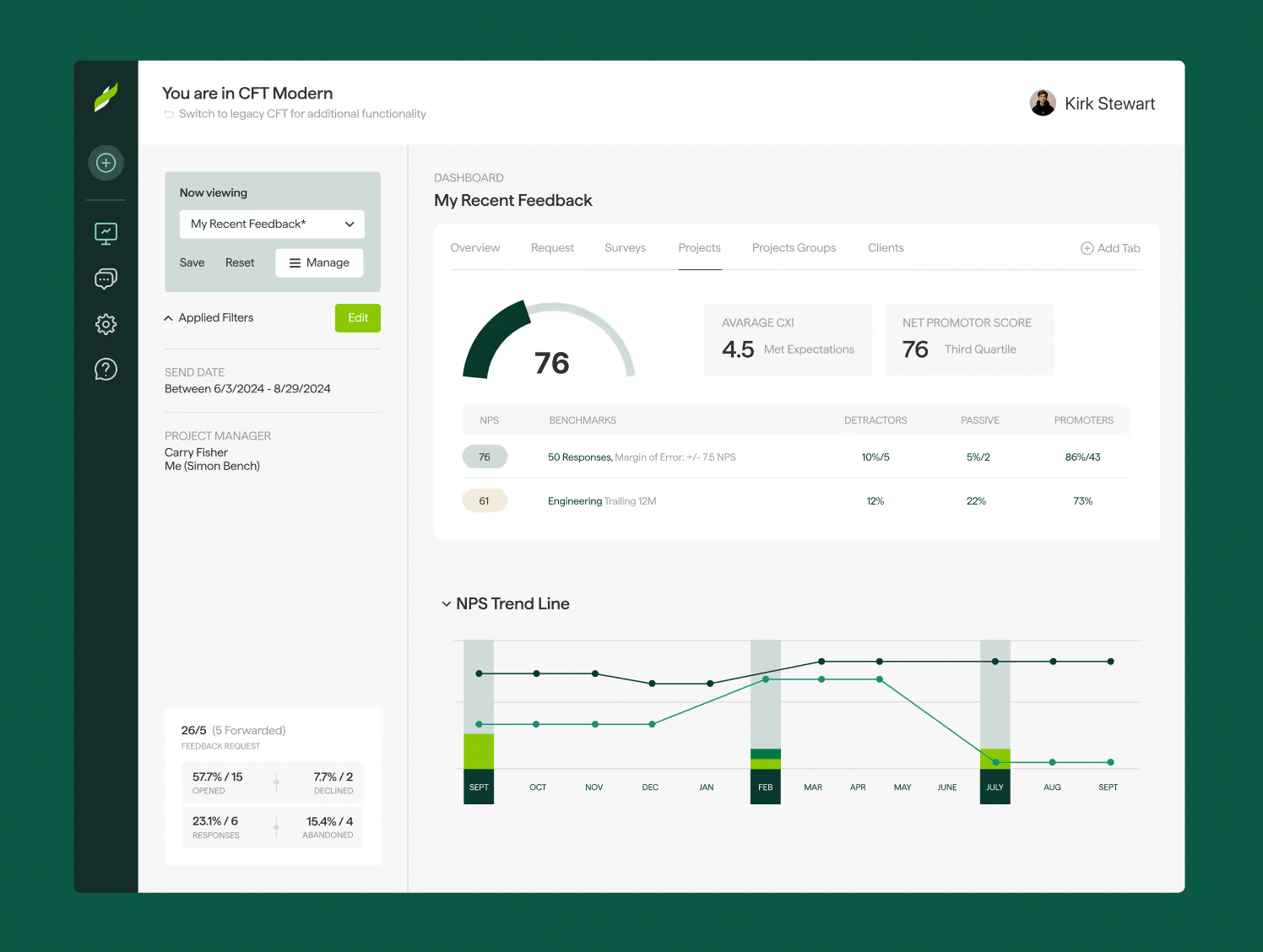
Collecting feedback is just the start. ClearlyRated provides in-depth analytics and real-time dashboards that allow you to interpret results and make data-driven decisions. The platform tracks NPS and a wide range of metrics, including response rates and customer lifetime value (CLV).
Dashboards and detailed reports visualize trends in easy-to-read graphs and charts. You can also compare your NPS to industry benchmarks and segment feedback by service type, client demographics, or location. These insights let you pinpoint areas for improvement, understand strengths and weaknesses, reduce churn, and drive long-term growth.
4. Feedback analytics
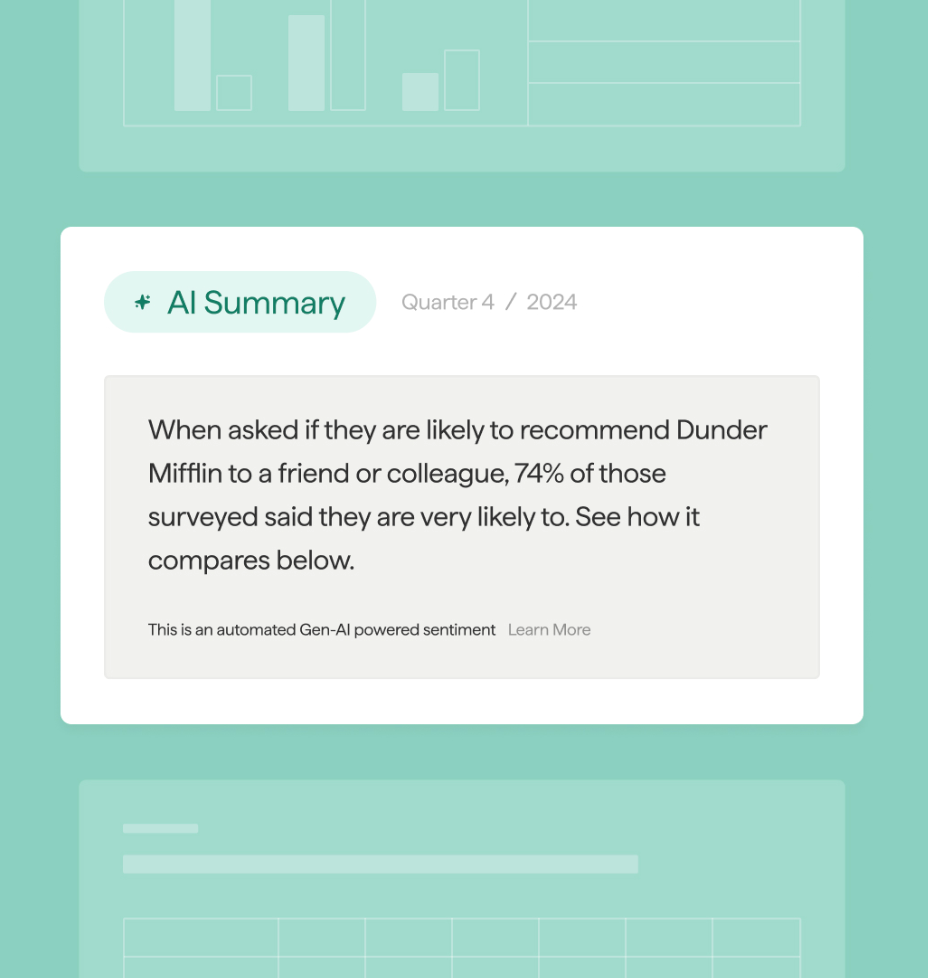
Our platform turns raw feedback into actionable insights that drive strategic growth. It helps you:
- Identify growth or expansion opportunities that impact business results
- Spot trends instantly with segmented reports
- Prioritize actions to address issues using an automated triage system
Our AI-powered sentiment analysis organizes and converts qualitative feedback into actionable intelligence. You can automatically extract sentiment from open-ended responses, categorize results, and benchmark performance against industry standards. View key insights at a glance to understand what truly matters to your top clients.
5. Closed-loop workflows
Insights are only valuable if they lead to action. Our closed-loop workflows ensure it addresses every client concern.
Follow-ups, milestone-based actions, and accountability measures reduce repeat client frustrations by 83% and turn promoters into referral-generating advocates, with the average active promoter driving $1.8M in new business.
Maximize Growth by Perfecting Your Ideal Client Profile
A clear, data-driven ICP for B2B services gives your marketing and sales teams a roadmap to focus on the clients who matter most. Drill down into the traits, behaviors, and satisfaction patterns that define your top accounts to attract and close more high-value leads.
We help you make this process effortless and precise. By leveraging CXI® scoring, NPS benchmarking, real-time dashboards, and feedback analytics, your team can uncover which clients align best with your services, why they stay, and where growth opportunities exist. Additionally, closed-loop workflows act on insights immediately, turning data into measurable outcomes.
Take the next step in building your data-driven ICP today! Book a meeting with us and start turning client insights into measurable growth.
FAQs
What is an ideal client profile (ICP)?
An ideal client profile defines the type of company that gains the most value from your services and generates the highest value for your firm. It outlines firmographics, budget, needs, decision structure, and satisfaction patterns to guide targeting and growth.
What is the difference between an ideal client profile and a buyer persona?
An ideal client profile describes the company you want to target, while a buyer persona describes the individual decision maker within that company. The ICP defines account fit, and the persona shapes messaging and outreach.
Why do B2B service firms need an ideal client profile?
B2B service firms need an ideal client profile to improve retention, increase win rates, and protect profitability. Clear targeting reduces churn, aligns expectations, and helps teams focus on high-value accounts instead of pursuing poor-fit prospects.
How do I create an ideal client profile?
You create an ideal client profile by analyzing top-performing clients, identifying churn patterns, collecting structured feedback, and documenting shared traits. Then, align sales, marketing, and CX teams around the defined characteristics.
What data should I use to build an ideal client profile?
You should use revenue data, retention rates, profitability metrics, satisfaction scores, expansion trends, and client feedback. This combination reveals which segments deliver long-term value and which segments create friction or early churn.

FAQs










.webp)






.png)

%20(1).png)

.webp)
.png)






%5B1%5D.webp)




.png)








_%20The%20Ultimate%20Guide.png)


.png)




%20in%20the%20Workplace.png)




.png)

%20and%20how%20can%20you%20increase%20it.png)
_%20A%20Step-by-Step%20Guide.png)

.png)