Customer Experience Statistics You Must Know in 2026


- Customer experience now outpaces price and product as the top competitive differentiator, yet 52% of consumers stop buying after a single bad experience.
- That gap between perception and reality costs revenue, making CX measurement, NPS tracking, and personalization essential for growth.
- Forward-looking firms see CX as a revenue engine, with top performers growing revenue up to 80% faster, and ClearlyRated helping B2B companies turn client feedback into retention and referral growth.
- AI, real-time dashboards, and structured CX programs tie experience data to business outcomes, giving firms the insights they need to benchmark, act, and stay ahead in 2026.
There’s a reason customer experience now outpaces price and product as the defining force in modern competition.
It’s not hype. Rather, it’s measurable, and the latest customer experience statistics make it impossible to ignore.
However, a massive perception gap persists between what companies think they deliver and what customers actually experience. Firms invest millions in product improvements while ignoring the very thing clients judge first, i.e., how they feel at every touchpoint.
In fact, Gartner suggests that 89% of businesses now compete primarily on CX, making it more strategic than product and price. And while nine out of 10 executives claim loyalty has grown, only four in 10 consumers agree. Worse still, 52% of consumers stopped buying from a brand after one bad experience.
In this article, we’ve broken down the most important B2B customer experience (CX) statistics shaping 2026. You’ll see how expectations continue to evolve, where organizations consistently overestimate their performance, and how ClearlyRated helps high-performing companies do things differently to earn trust, retention, and sustainable growth.
CX ROI and Business Impact Statistics
Every leader now asks the same question: Does CX move the bottom line?
The answer is an emphatic yes. See for yourself.
- In PwC’s 2025 Customer Experience Survey, 52% of consumers say they stopped using or buying from a brand because of a bad experience, which is a direct indicator of revenue lost due to poor CX.
- Customers who rate experience a perfect score spend 140% more and remain loyal up to 6x times longer, SuperOffice found. When brands deliver what customers want most, they unlock deeper wallet share and sustained loyalty.
- Deloitte’s 2025 Consumer Loyalty Program Survey highlights that customer loyalty programs and personalized experience investments are integral to retention strategies, with deep engagement and CX leadership linked to stronger long‑term loyalty.
- According to Forrester’s Total Experience Score research, brands that align customer experience (CX) and brand experience (BX) can unlock up to 3.5× revenue growth. This shows how integrated experience management multiplies financial returns.
- Industry market data for 2026 shows that 86% of buyers are more willing to pay for a better experience, and that strong CX strategies drive higher retention and stronger revenue performance compared to competitors.
- Nearly 99% of consumers say customer service influences their buying decisions, indicating that experience shapes both acquisition and purchase decisions.
- Around 70% of customers will abandon a brand after just two bad experiences, showing how fragile loyalty has become in the era of high expectations.
- Recent industry reports show that 83% of companies working with CX consultants see positive ROI within 12 months, with many reporting 15–20% increases in cross‑selling and 25% reductions in churn, all contributing to stronger bottom‑line performance.
In 2026, executives prioritize initiatives that fuel growth, and CX leads the list. A recent case study from ClearlyRated proves this point. TekCom Resources, a B2B services company, improved gross profit margin by 18.6% and boosted referral generation by 50% after adopting ClearlyRated’s client feedback workflows.
Firms that actively measure customer experience ROI statistics are 94% more likely to achieve above‑average growth.
Customer Loyalty and Churn Statistics
Silent churn is the biggest threat to B2B companies today. In fact, most dissatisfied customers never complain, but they simply leave.
When a customer walks away silently, businesses lose growth with little warning. These customer experience stats demonstrate it clearly:
- 52% of consumers stopped buying from a brand after a bad product/service experience.
- 29% stopped due to poor CX, either online or in-person.
- 74% of consumers switched brands in the past year, and 32% will abandon a brand after just one negative interaction, demonstrating how fragile loyalty has become.
- 66% of consumers would switch brands for better loyalty rewards, showing that loyalty incentives directly influence churn behavior.
Look closely at these numbers. More than half of customers leave after a bad experience. More than 70% will abandon after just two negative moments. However, 55% of those customers won’t ever say a word about their dissatisfaction.
Unvoiced churn does more damage than visible churn because it hides in plain sight. Only one in 26 unhappy customers ever complain. The rest switch silently and cost you future revenue.
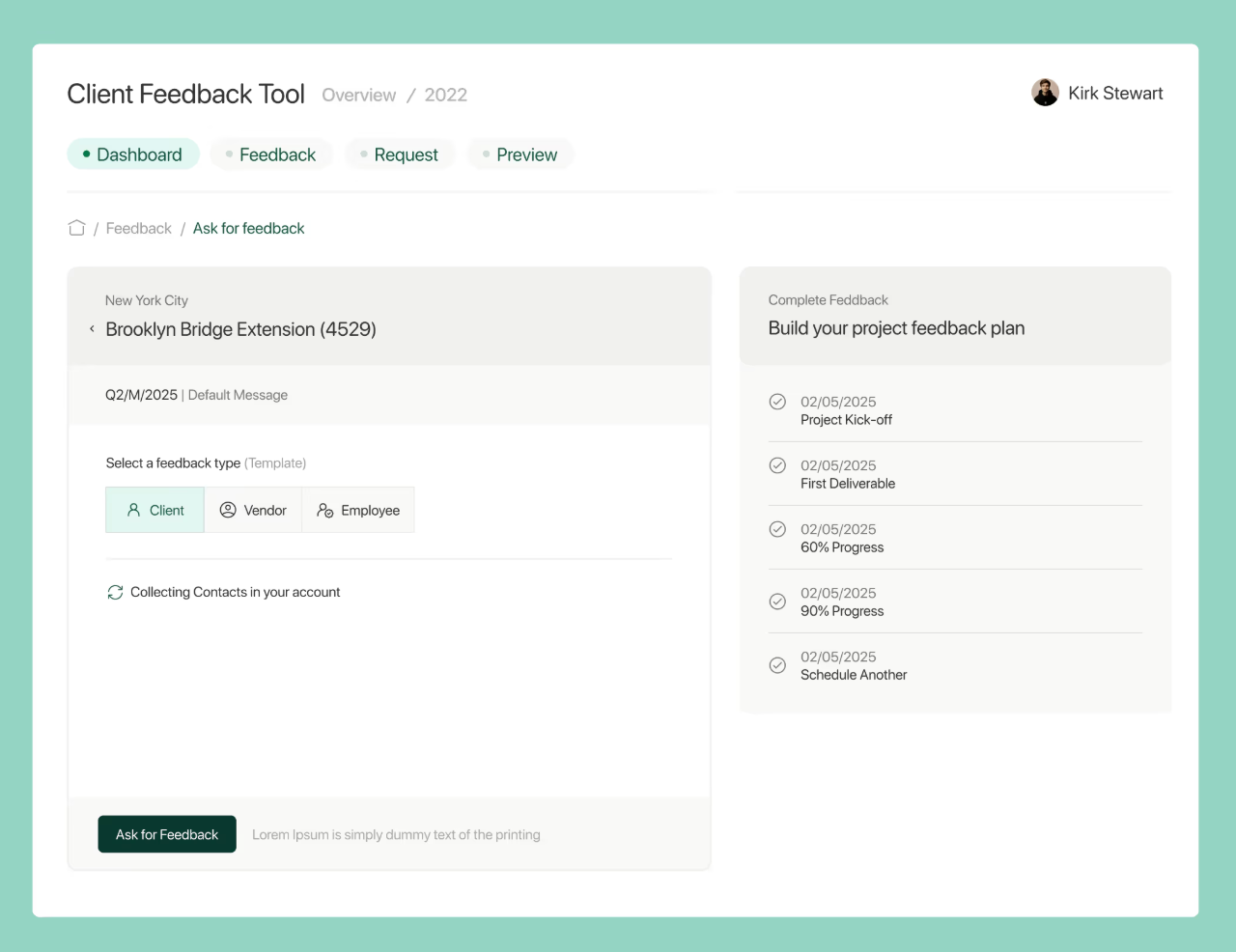
This silent churn shows up especially in complex B2B engagements. In fact, our research found that one in four B2B customers have complaints they never voice. Leaders believed their clients were satisfied, but only 8% of clients agreed. Our patented CXI® methodology uncovered 380% more pain points than NPS alone, helping firms catch churn triggers before customers exit.
Loyal customers spend more. In fact, 82% of customers say they will spend more and remain loyal to brands that consistently deliver great customer interactions. This highlights the direct link between superior experience and increased customer spend and loyalty.
B2B Customer Experience Statistics
B2B buying now demands B2C-level experience. When B2B delivery falls short, buyers defect fast.
These numbers matter especially for services firms. When business buyers feel understood, they buy more and stay longer. But poor experience drives switch behavior:
- 67% of B2B buyers say they switched suppliers due to bad CX.
- 74% say they would switch if a competitor offered a better experience.
This trend reveals something deeper: B2B buyers now judge vendors emotionally, not just technically. B2B buying has the same frustration thresholds as B2C.
B2B decision cycles stretch long, involve stakeholders, and hinge on trust. When CX fails, decision-makers defect quickly. 73% of buyers now consider experience decisive in purchase decisions.
But only 14% of large B2B firms have integrated CX deeply enough to lead. That means leaders who invest now gain a massive competitive edge.
Let’s look closer at the most actionable B2B statistics:
- Salesforce shows 86% of B2B buyers are more likely to buy when the seller understands their goals.
- Among buyers considering a supplier change, 54% point to subpar digital customer experiences as a primary reason for switching.
And when you overlay the Net Promoter Score guide, the gap widens. The B2B services industry NPS was relatively stable from 2021 to 2023, hovering around 40. However, in 2024 general B2B NPS rose six points from 2023 to 45.
For professional services, the differences matter. Firms that check in with employees daily earn NPS scores of up to 66, compared with industry benchmarks of around 36. Our 2024 customer experience benchmarks show similar patterns, with median NPS of 57 in AEC and 55 in IT services, but only 4.2% of AEC firms have fully integrated CX into operations.
AI and Technology in CX Statistics
Technology drives and scales customer experience, and AI has moved from hype to measurable impact.
In fact, AI now helps companies anticipate needs, personalize experiences, and reduce friction. Nearly 80% of executives report improvements in CX from conversational AI. And 92% of businesses now embrace AI‑powered personalization.
- Gartner predicts that by 2028, 70% of CX journeys will begin and resolve through conversational AI on mobile.
- Analysts also expect that 85% of customer interactions will be managed without human intervention. This highlights a structural shift where customers expect fast, predictive engagement.
- However, trust still remains a challenge. Only 57% of customers trust companies to use AI ethically, per Salesforce research. B2B buyers also show cautious interest, with only 42% willing to share personal data with AI agents to improve service.
- Business leaders, however, are seeing measurable returns, where 57% report that chatbots deliver a large ROI on minimal investment.
- As a result, organizations are responding. IBM reports 35% of companies train employees to work with AI and automation tools to enhance human‑machine collaboration. The focus is on combining human insight with AI efficiency to drive meaningful outcomes.
In 2026, seeing data is one thing, but acting on it is another. Modern platforms now automate sentiment analysis, tie experience performance to business outcomes, and track key CX metrics. Our Gen AI-powered platform captures real-time client feedback surveys for B2B firms, benchmarks performance against industry standards, and delivers actionable customer experience data. This lets service teams refine their approach, strengthen customer satisfaction, and improve customer retention metrics.
Our platform also supports reputation management by boosting your online presence with verified ratings, testimonials, and industry-specific awards. You can showcase success stories in our trusted B2B directory, increase visibility on Google, and demonstrate the ROI of your CX programs.
With these tools, firms can track NPS metrics, measure customer experience ROI statistics, and act on insights before issues escalate. This shows exactly why B2B firms must prioritize CX and how top CX software can enable it.
Personalization and Customer Expectations Statistics
Personal expectations shape loyalty. If you meet expectations, clients stay. If you don’t, they leave.
Today’s customers judge every brand by how well it knows them, how consistently it responds, and how quickly it reacts.
- 80% of customers say personalization influences their purchase decisions.
- 63% of customers say personalized recommendations make them more loyal to a brand.
- 45% of customers are willing to share personal data with a brand in exchange for better personalization.
But personalization isn’t just a nice‑to‑have. For B2B buyers, it’s expected.
- A full 86% of B2B customers now expect brands to know their preferences and history.
- In a Gartner sales survey, 69% of B2B buyers reported experiencing inconsistencies between the information on a vendor’s website and what sales reps communicated, a key driver of mistrust and lost deals.
- As urgency rises, 90% of buyers rank an immediate response as critically important.
Modern feedback platforms help firms unlock insights into personalization. We offer industry‑specific survey templates and real‑time dashboards that help services firms tailor outreach and respond with precision.
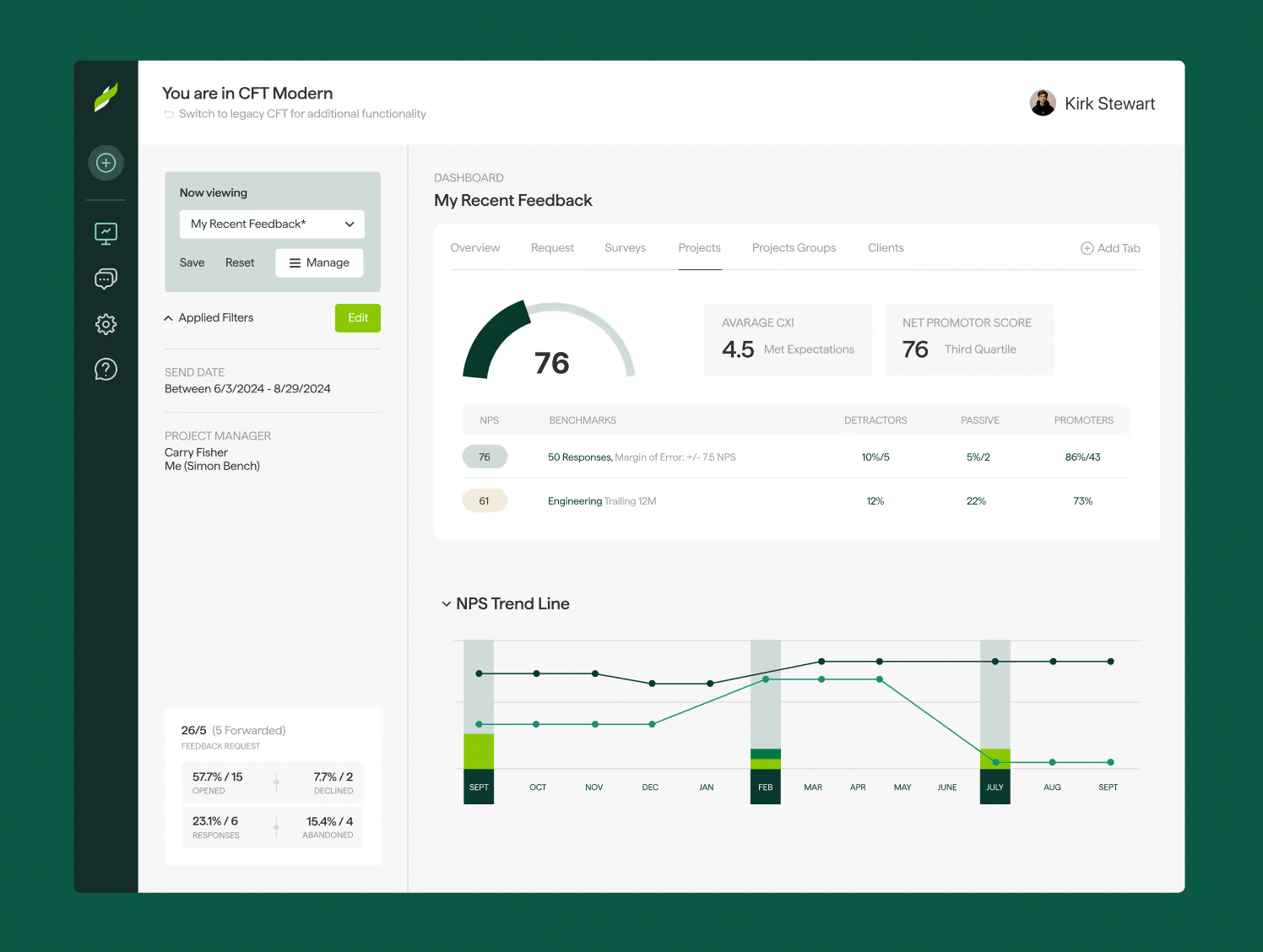
Whether it’s staffing, AEC, legal, or accounting, contextualized feedback builds relevance and trust.
NPS and CX Measurement Statistics
What gets measured gets managed. But most companies still don’t link CX data to business outcomes.
- Executives now embed CX at the top of their organizational strategy. Nearly 90% of companies now expect to have a Chief Customer Officer or equivalent role, and 93% of leaders say improving CX is a top priority for their organization.
Organizations are putting their money where their strategy is.
- For example, 74% are increasing CX investments, and 70% are hiring additional CX-focused staff.
- Despite this, only 31% of executives strongly agree that their customers are satisfied most of the time. Only 25% of customers said they were “very satisfied” with their most recent service interaction.
That’s why NPS statistics matter so much. NPS offers a universal language for experience measurement, but only if tied to action and revenue outcomes.
Across thousands of B2B service firms, our proprietary NPS benchmarks help leaders see where they stand and act strategically:
ClearlyRated doesn’t stop at scores. We tie NPS directly to revenue, retention, referrals, and growth. By connecting CX data to outcomes, leaders can turn client feedback surveys for B2B firms into actionable insights, inform investment decisions, and optimize customer experience ROI.
Why CX Matters More Than Ever
As we are now familiar with the fact that CX drives revenue, retention, and competitive advantage. However, a dangerous perception gap persists between what companies think they deliver and what customers actually experience.
In 2026, CX is no longer optional, but it’s essential. The opportunity is especially wide open for B2B service firms. Only 14% of large B2B companies currently deliver a truly customer-centric experience, leaving significant growth on the table for most markets.
As the next step, here’s what you can do:
- Benchmark your strategy
- Identify gaps
- Justify budgets
- Align leadership
- Operationalize insights
Additionally, invest in structured programs that close the loop with clients and prioritize measurements that directly tie to outcomes.
At ClearlyRated, we help firms gather real-time client feedback with AI-powered surveys, benchmark performance against peers, and uncover hidden pain points before they escalate. When measurement aligns with action, you activate promoters, reduce churn, and build predictable growth.
Ready to turn insights into predictable growth? Book a demo with ClearlyRated to capture real-time client feedback and uncover hidden pain points before they escalate.
FAQs
1. What is customer experience (CX) in B2B?
Customer experience (CX) in B2B refers to how clients perceive every interaction with a company across the entire lifecycle—from initial contact to post-sale support. It includes communication, service quality, responsiveness, and overall relationship management.
2. Why is CX more important than price and product in 2026?
CX has become a primary competitive differentiator because customers prioritize how they feel when interacting with a brand. Studies show that a majority of businesses now compete on CX, and customers are willing to pay more for better experiences.
3. How does customer experience impact revenue and ROI?
Strong CX directly drives revenue by increasing customer retention, loyalty, and spending. Customers with positive experiences spend more, stay longer, and are more likely to refer others, while poor experiences lead to churn and lost revenue.
4. What causes customer churn in B2B businesses?
The biggest cause of churn is poor customer experience. Many customers leave after one or two bad interactions, and most do so silently without providing feedback, making it harder for companies to identify and fix issues.
5. How is AI transforming customer experience?
AI enhances CX by enabling personalization, faster responses, and predictive support. Tools like chatbots and AI-driven analytics help businesses understand customer needs, reduce friction, and improve engagement at scale.
6. How can companies measure and improve CX effectively?
Companies can measure CX using metrics like Net Promoter Score (NPS), customer satisfaction (CSAT), and feedback surveys. The key is to connect these insights to business outcomes and take action to improve customer journeys continuously.
FAQs








.webp)






.png)

%20(1).png)

.webp)
.png)






%5B1%5D.webp)





.png)









_%20The%20Ultimate%20Guide.png)


.png)




%20in%20the%20Workplace.png)




.png)

%20and%20how%20can%20you%20increase%20it.png)
_%20A%20Step-by-Step%20Guide.png)

.png)